- Home
- Before you incubate
- Hatch or buy?
Hatching eggs vs buying chicks: which is the best choice for you?
It's Spring! And suddenly, everyone wants more chickens.
You see fertile eggs advertised. The feed store fills with fluffy chicks. A local breeder has point-of-lay hens ready to take home now.
It all feels exciting – and perhaps just a little overwhelming. Should you...
- hatch your own eggs?
- buy baby chicks?
- skip the waiting and bring home adult hens?
Over the past fifteen years, I've done all three. I've celebrated successful hatches, brooded day-old chicks, dealt with unexpected roosters, and brought home ready-to-lay hens when I wanted eggs without the fuss.
Each path works. Each also comes with its own workload, risks and realities that aren't always obvious at the start.
So rather than drowning you in detail, I'm going to keep this simple.
In the next few minutes, I'll walk you through the differences clearly and honestly, so you can choose the option that truly fits your home, your time, and your family.

🪶 Featherlight Takeaways.
Quick insights from this article – especially helpful if you’re deciding how to add new chickens to your flock this spring.
- There are three main ways to grow a flock: hatching eggs, raising chicks, or buying adult hens. Each suits different situations.
- If you want eggs quickly and with the least stress, point-of-lay hens are the easiest starting point.
- Hatching eggs is the most rewarding experience, but also the most time-intensive and unpredictable.
- Raising chicks offers a balance between involvement and simplicity for many families.
- Thinking about roosters before you choose helps prevent one of the most common beginner problems.
The three main ways to add chickens to your flock.
1. Hatch your own eggs.
This means buying fertile eggs (or using eggs from your own hens and rooster) and managing the full 21-day incubation process yourself.
You're responsible for temperature, humidity, turning the eggs, and monitoring the hatch. When successful, you'll have day-old chicks that then need to be raised under heat in a brooder.
It's fascinating and hugely rewarding (particularly for children) but it's also the most time-consuming and unpredictable option.
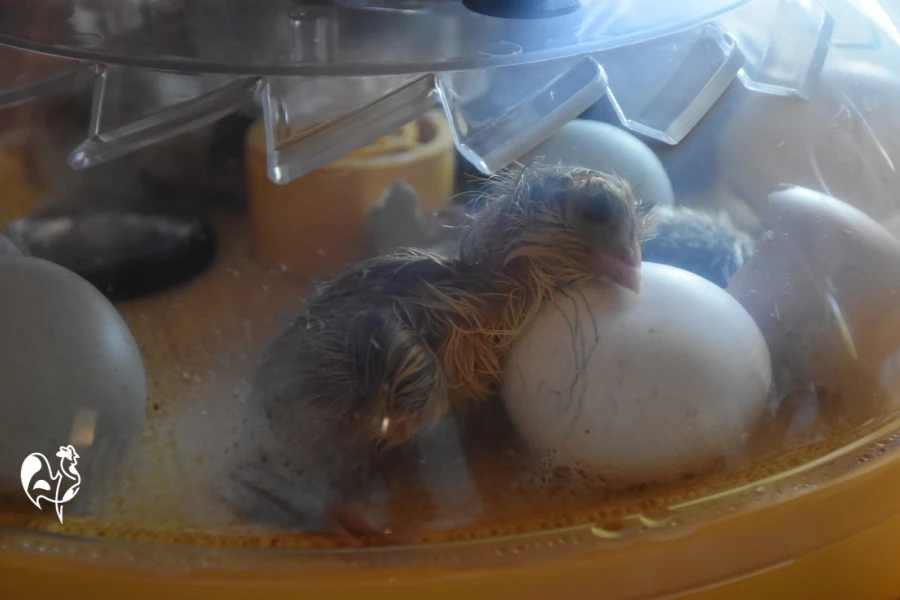 Hatch day in my Brinsea incubator.
If you’d like to understand exactly what incubation involves, I explain the full process step-by-step in this guide to incubating chicken eggs.
2. Buy day old chicks.
This avoids the incubation stage.
You buy newly hatched chicks from a hatchery, feed store, or local breeder and raise them yourself until they're fully feathered and ready to move outside.
You still experience the fluffy, baby-chick stage, but without the pressure and uncertainty of hatch-day.
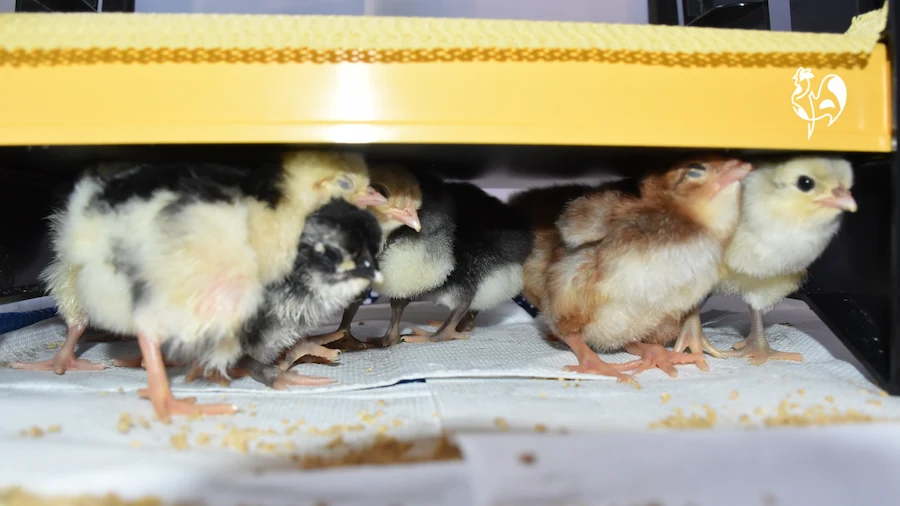 Some of my day old chicks under their brooder lamp.
Raising chicks successfully depends largely on a safe brooder setup, something I cover in detail here.
3. Buy point-of-lay (or adult) hens.
This is the simplest route.
Instead of raising baby chicks, you buy young hens that are either already laying or just about to start. They move straight into your coop and you avoid the brooder stage completely.
In many cases, you'll be collecting eggs within days.
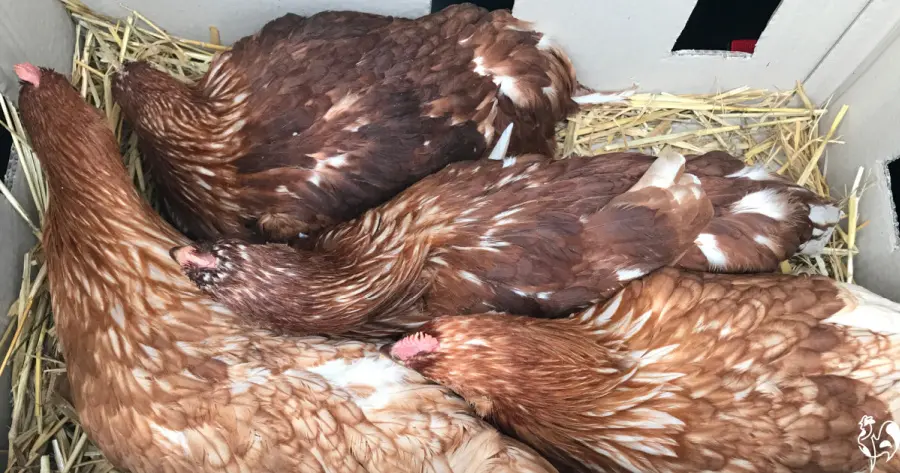 Bringing home my very first point-of-lay hens.
Introducing new hens safely is important to avoid bullying. Here’s how I do it.
That's it. Three paths.
The question is: which makes most sense for you?
To help you decide, let's look at the four factors that matter most when choosing how to grow a flock.
The four questions that really matter.
When people ask me whether they should hatch eggs, buy chicks, or start with adult hens, they're often expecting a complicated answer.
In fact, the decision usually comes down to four simple questions. Consider each one, think about them honestly in terms of your own situation, and the right choice will become surprisingly clear.
1. How quickly do you want eggs?
This is often the biggest deciding factor.
- Point-of-lay or adult hens are the fastest route. In many cases, you'll be collecting eggs within days – sometimes even the first morning after they arrive!
- Day-old chicks require patience. Most breeds won't begin laying until around five to six months of age, depending on breed and season.
- Hatching eggs take the longest of all. You'll spend at least three weeks incubating, followed by several months raising chicks before a single egg appears.
If your main goal is fresh eggs soon, adult hens are the clear winner.
Sometimes, hens can stop laying or simply not start. Here's why, and what to do about it.
2. How much work do you want?
All chickens require care, but the level of hands-on involvement varies enormously.
- Hatching eggs demands the most attention. Incubators must be monitored daily, conditions kept stable, and hatch day can require constant supervision. Once chicks arrive, brooding begins immediately.
🐥 A note from my flock: one of my favourite moments each spring is hearing the first chick peeping from inside an egg. Incubation is magical, and having an incubator with a clear view keeps the magic alive.
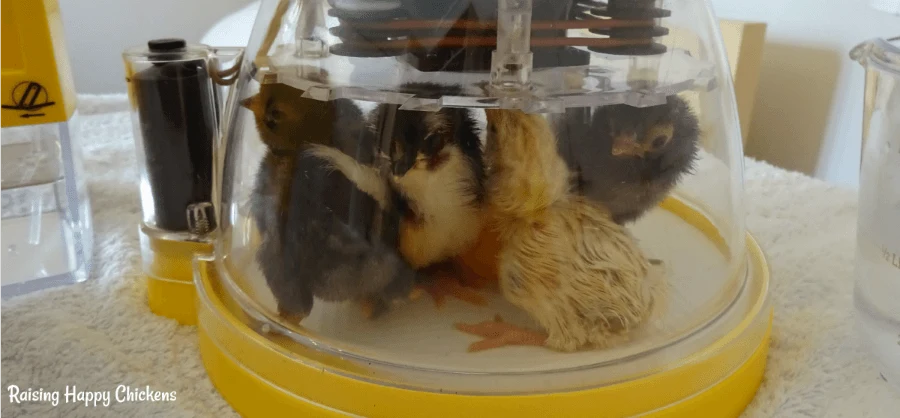
These are some healthy chicks drying out in my small Brinsea incubator before going into the brooder.
- Buying chicks removes the incubation stage, but still involves weeks of brooder management: heat, cleanliness, careful feeding, and regular checks.
- Buying adult hens is by far the least labour-intensive option. After a sensible quarantine and introduction period, your hens should settle into normal flock routines quickly.
Think very carefully about the time you have available. For busy households or first-time chicken families, this difference matters more than many people expect.
3. How much risk are you comfortable with?
Every method carries some uncertainty, but there are differences.
- With hatching, not every egg develops, not every chick survives, and occasionally some hatch with distressing abnormalities. Even experienced people rarely achieve a 100% successful hatch rate.
- With day-old chicks, particularly those sent by post, losses are uncommon but still possible, particularly during the early brooder stage when chicks are most vulnerable.
- With adult hens, survival rates are higher, but you may not always know their full health history or previous living conditions.
None of these risks is a deal-breaker. But understanding them beforehand prevents disappointment later.
4. What's your budget?
It's important to be realistic here. The cheapest option at first glance isn't always the least expensive in the long term.
- Hatching eggs may seem economical but incubators, brooders, heat sources and ongoing electricity costs quickly add up, especially for a first hatch.
- Buying chicks spreads costs more gradually, though you’ll still need brooding equipment and several months of feed before eggs arrive.
- Adult hens usually cost more upfront, but require little specialist equipment and begin contributing eggs almost immediately.
Paying more for adult hens may be less exciting, but means spending less in the long run.
At this point, you may already be leaning toward one option.
But before you decide, there's one reality that's critically important but surprises almost every new chicken keeper…
In nearly fifteen years of keeping chickens, I've found that this is often the single biggest practical difference between the three options. It's not about romance or excitement: it's about realism.

The rooster reality (and why it's critical).
If you're unsure whether keeping a rooster is realistic where you live, this guide explains what to expect.
There's one factor that often changes everything: male chicks.
- If you hatch your own eggs, you must assume that around half will be male. There's no way around that. Even experienced breeders expect a near 50/50 split. It may be more, it may be less. But unless you're extremely lucky, there will always be at least one male.
- If you buy day-old chicks described as "straight run", the same applies. Roughly half will grow into cockerels.
- Buying sexed female chicks from breeds who have different characteristics at hatch reduces that risk significantly, though it's never 100% foolproof.
- Buying point-of-lay or adult hens almost completely removes this issue. You know what you're bringing home, and your flock size (and noise level!) stays predictable.
For some people, having male chickens is not a problem. If you live rurally, have space, and are happy to keep a noisy rooster, it can work well.
But for many backyard keepers, especially in suburban areas, roosters simply aren't allowed. Noise complaints, neighbour tensions, and local regulations make them impossible to keep. And finding good homes for unwanted males is much harder than new chicken keepers expect.
In nearly fifteen years of keeping chickens, I've found that this is often the single biggest practical difference between the three options. It's not about romance or excitement: it's about realism.
Before you decide, be absolutely clear about what you would do if you ended up with a rooster.
🐥 A note from my flock: over the years I've hatched some wonderful chickens, including quite a few unexpected cockerels. Finding good homes isn't always easy, which is why I encourage anyone new to having chicks to think about this before starting a hatch.
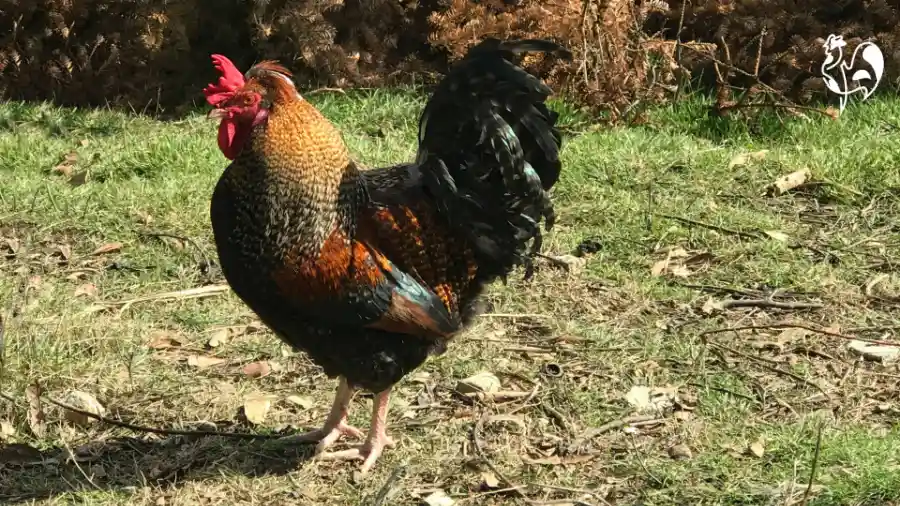
At one point I had seven males in a flock of thirty hens. Finding homes for them in rural Italy was fairly easy, but in other parts of the world would be a real nightmare.
This is one of the roos I hatched myself, along with six others in a hatch of twenty. I loved him so he stayed, and I rehomed the rest.
Which option suits you best?
By this stage, you may already have a sense of which direction feels right for you, your family and your situation.
There's no single "best" way to add chickens to your flock, only the option that best fits your time, space, experience and expectations.
Here's a simple way to think about it.
Choose hatching eggs if you…
- enjoy hands-on projects and learning new skills
- are fascinated by the process of incubation
- have children who would both be excited by, and learn from, the process
- have time to monitor equipment daily
- are prepared for some disappointment if hatches fail
- can legally keep, or responsibly rehome, males
- want the full experience from egg to adult bird.
Hatching can be incredibly rewarding, and suits anyone who enjoys the (sometimes stressful) journey as much as the outcome.
Choose baby chicks if you…
- want to raise friendly birds that grow used to handling
- are happy managing a brooder for several weeks
- have a safe indoor or sheltered space for chicks
- are not worried about waiting a few months for eggs
- want the chick-raising experience without the stresses of incubation.
For many families, this offers a good balance between involvement and simplicity.
Choose point-of-lay or adult hens if you…
- want fresh eggs as soon as possible
- prefer a simpler, lower-risk start
- don't want the expense of incubating and brooder equipment
- have local rules which make keeping roosters difficult
- are new to chickens and want to build confidence first.
Starting with adult hens is often the smoothest introduction to chicken keeping, and there’s absolutely no shame in choosing the easier path. I started with just four Red Star hens, many years ago.
My honest recommendation.
After nearly fifteen years of keeping chickens, I've added birds to my flock in all three ways: hatching eggs, raising day-old chicks, and buying adult hens.
The truth is, each method has its place.
- If you're completely new to chickens, my recommendation is to start with point-of-lay hens.
- Hens allow you to learn the rhythms and needs of daily chicken keeping without the added pressure of incubation, brooding or dealing with male chickens.
- Once you understand how chickens live and behave, raising chicks or attempting a hatch becomes less stressful and much more enjoyable.
That said, if your goal is the experience of watching life develop inside an egg, or raising chicks from their very first days, then hatching or buying chicks can be deeply rewarding. Some of my most memorable moments as a chicken keeper have come from both.
There isn’t a right or wrong choice here. The best decision is simply the one that fits your time, confidence, space and expectations right now. You can always try another approach later.
When you feel ready to try hatching, these step-by-step incubation resources will guide you through the process safely.
Whichever you choose, you'll find so much joy in your chickens!
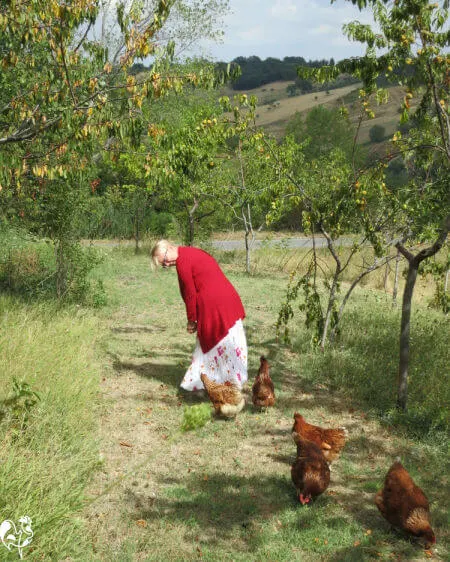 Wandering through the fields in Italy, always followed by some of my hens!
Frequently asked questions
Is it better to hatch eggs or buy chicks?
Is it better to hatch eggs or buy chicks?
Neither option is automatically better: it depends on what you want from the experience. Hatching eggs offers the full life-cycle experience but requires more time, equipment and patience. Buying chicks removes the uncertainty of incubation while still allowing you to raise birds from a young age.
Is it cheaper to hatch your own chickens?
Is it cheaper to hatch your own chickens?
Not usually, especially for beginners. Incubators, brooders, heat sources and electricity costs often mean hatching is more expensive at first than people expect. The main benefit is experience rather than savings.
See this series of articles for an idea of incubating equipment costs.
Do all fertilised eggs hatch?
Do all fertilised eggs hatch?
No. Even under ideal conditions, some eggs will not develop or hatch successfully. Hatch rates vary depending on egg quality, storage conditions and incubation management.
Can you avoid getting roosters when raising chicks?
Can you avoid getting roosters when raising chicks?
Not completely. "Straight-run" chicks are typically about 50% male. Even sexed chicks are not guaranteed to be female, although hatchery accuracy is usually high.
Are adult hens hard to introduce to an existing flock?
Are adult hens hard to introduce to an existing flock?
They can be, but careful quarantine and gradual introductions usually prevent problems. Adult hens generally settle well once the pecking order is established.
Want help to hatch?
If you decide that hatching eggs might be the right next step for you, I go into detail about incubation, hatch day and chick care in my step-by-step incubation resources, including my upcoming guided incubating and hatching course.
Watch this space!

- Home
- Before you incubate
- Hatch or buy?

Partner of the Month: Grandpa's Automatic Feeder
Popular articles


Copyright © 2012- Raising Happy Chickens: All rights reserved regardless of links or attributions.
I do not SELL ANY PERSONAL INFORMATION FROM THIS WEBSITE. PLEASE SEE My PRIVACY POLICY FOR MORE DETAILS.
Click to see my copyright, privacy and affiliates policies.
Click Here to see my policy about external ads, articles and links.
Click here to contact me.