- Home
- Beginner's Guide
- Adding chickens
How to introduce new chickens to your flock safely.
Introducing new chickens to an existing flock can feel daunting.
If you've ever seen hens establish a pecking order, you'll know it's not always gentle, and the thought of your new birds being bullied or injured is enough to make anyone hesitate.
The good news is that, with planning and patience, introductions can go smoothly.
Whether you're adding young chicks or introducing adult chickens, there are simple steps you can take to reduce stress, limit bullying, and help your flock settle safely.
🪶 Featherlight Takeaways.
Quick insights from this article: especially helpful if you're adding new chickens and want some quick tips to avoid stress, bullying, or injury.
- Introduce new chickens gradually, not all at once.
- Always use a "see-but-don't-touch" stage first.
- Expect some pecking, but watch for signs of real bullying.
- Give plenty of space, feeders, and distractions.
- Never rush introductions: patience leads to a calmer flock.
Why chickens peck when new birds are introduced.


Chickens live within a social structure known as the pecking order. It's a natural system that helps the flock establish hierarchy and maintain balance.
When new chickens are introduced, that balance is disrupted and the flock will instinctively begin to re-establish it.
This often involves pecking, chasing, and some jostling for position.
While this behaviour can look worrying, a certain amount of pecking is normal and expected.
The key is to recognise the difference between normal pecking and harmful bullying, and to manage introductions in a way that keeps everyone safe.
If you'd like to understand more about how the pecking order works and how to manage it, I've explained it in more detail here.
Step 1: Quarantine new chickens first.
Before introducing any new chickens to your flock, it's important to keep them separate for a short period.
This helps reduce the risk of introducing illness or parasites to your existing birds, something that can spread quickly once chickens are sharing the same space.
- A quarantine period of around one to two weeks is usually enough to observe your new chickens and make sure they're healthy.
- Keep them in a completely separate area, well away from your main flock, and use separate feeders, drinkers, and equipment if possible.
- If you’ve hatched your own chicks and they haven't had contact with other birds, quarantine is not necessary.
- However, if there's any chance they've been exposed to other chickens, for example from a breeder or hatchery, it's always safest to err on the side of caution.
It can feel like a delay when you're eager to introduce them, but it's one of those quiet, behind-the-scenes steps that makes everything else go more smoothly.
Here's a link to my detailed article about how to quarantine chickens safely.
Step 2: Let chickens see and hear each other, but not touch.
Once your new chickens are healthy and ready, the next step is to let them become familiar with each other without direct contact.
This means setting up a barrier such as wire fencing or a separate pen so that both groups can see and hear one another, but can't peck or chase.
This stage is one of the most important parts of the whole process.
It allows the flock to begin adjusting to the presence of the newcomers, while keeping everyone safe. You'll often notice curiosity at first, followed by a gradual settling as the "newness" wears off.
Try to keep this stage going for at least a few days, or longer if needed. There's no rush. The more time they have to get used to each other, the smoother the next steps are likely to be.
🐥 A note from my flock:
When I introduce new chickens, whether they're growing chicks or adults, I always start with this "see but don't touch" stage.
I use either a dog crate (for a single hen) or a simple wire barrier so both groups can watch each other safely.
In this photo, you can see one of my older flocks gathered along the fence, very interested in the new arrivals on the other side.
Over a few days, that initial curiosity tends to replace any tension, and makes the next step much calmer for everyone.
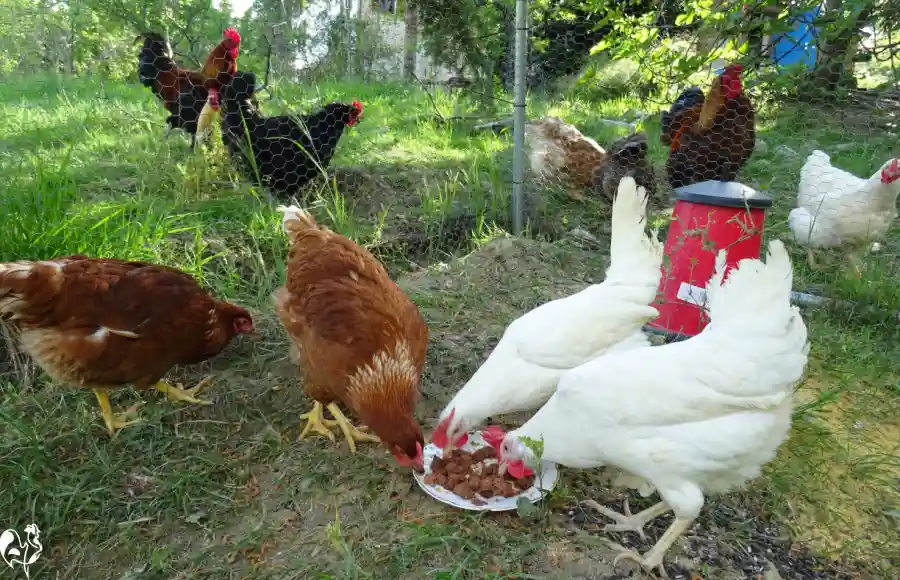 A simple barrier allows chickens to see and hear each other safely before any direct contact.
Step 3: Introduce new chickens into the coop at night.
Once your chickens are familiar with each other, you can begin the first direct introduction.
I find that one of the calmest ways to do this is by placing the new chickens onto the roost in the coop at night, when my existing flock is settled and sleepy.
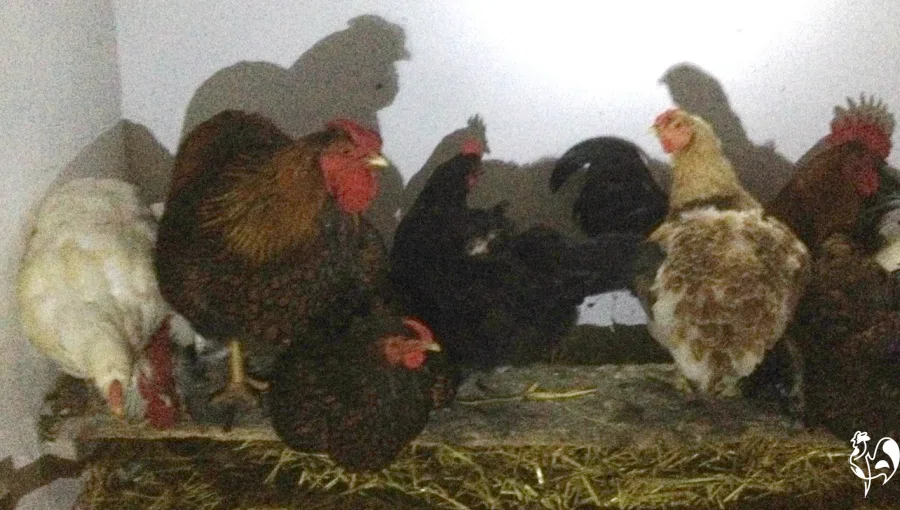 Introducing new chickens at night can help reduce stress during those first interactions.
In the dark, chickens are far less likely to react strongly and by morning, the new birds have somehow become part of the group.
It doesn't remove pecking altogether, but it can soften those first interactions and make the transition less stressful.
Make sure there's enough space in the coop for everyone, and that your new chickens can settle safely on the roost.
Step 4: Allow supervised free-ranging time.
Once the chickens have spent time together in the coop, the next step is to let them interact more freely, but under your supervision.
If possible, do this in a neutral space such as a garden or run that doesn't belong entirely to either group. This helps reduce territorial behaviour.
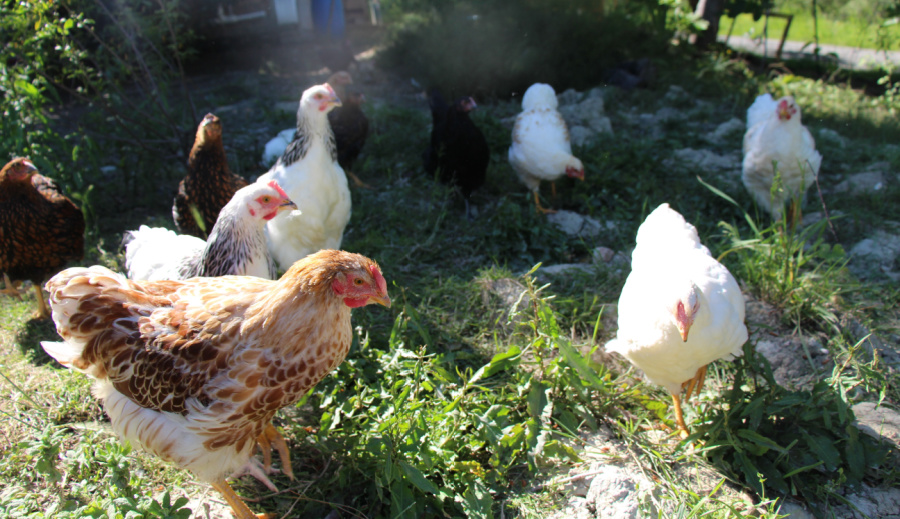 Some of my new hens mix with my existing flock. Supervised time together helps chickens adjust while you keep a close eye on behaviour.
Stay nearby and watch how they interact. Some pecking and chasing is normal as the flock continues to establish its pecking order.
What you're looking for is the difference between brief squabbles and more persistent, aggressive behaviour.
Providing distractions can help at this stage. I usually scatter a couple of handfuls of mealworms to reduce tension. Just make sure you have enough space for lower-ranking birds to have a chance to move away.
Noticing a persistent bully? It may be time for isolation.
What's normal and what's not.
It's completely normal to see some pecking, chasing, and squabbling when new chickens are introduced.
This is simply the flock working out its pecking order, and in most cases it will settle on its own given time and space.
You may notice:
- brief pecking or chasing
- one hen asserting herself over another
- the new chickens keeping a little distance at first.
All of this is part of the process. It can feel uncomfortable to watch at first, but most flocks will settle with time.
However, there are times when behaviour goes beyond normal and needs intervention.
Watch out for:
- repeated, targeted bullying of one bird
- pecking that causes injury or bleeding
- a chicken being prevented from eating or drinking
- any chickens who are constantly hiding.
If you see these signs, it's best to separate the chickens again and take a step back before trying again more gradually.
🐥 A note from my flock: I noticed that my new Sablepoot rooster, Bono, had a bloody comb. Watching the flock, I realised he was being bullied by one of my Red Star hens. The comb was treated and the bullying hen was isolated (but within sight and sound of the flock) until she mended her ways.
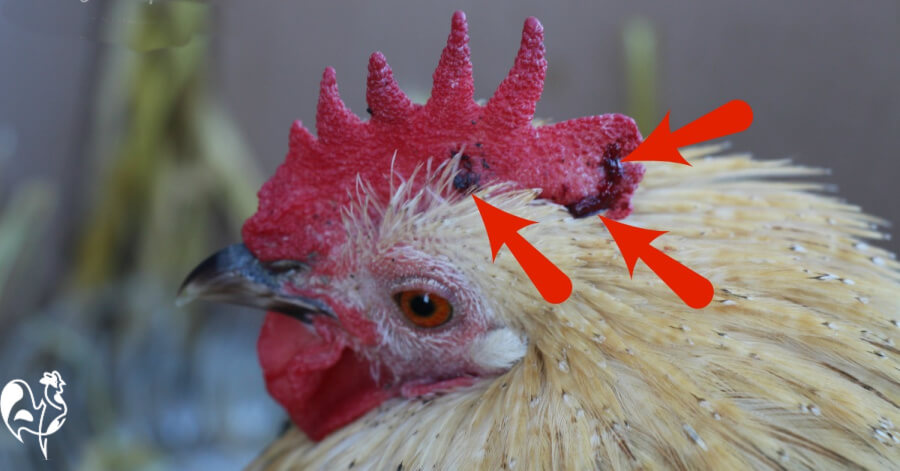 Any chicken with a bloodied comb needs to be protected from bullies.
Common mistakes to avoid.
Introducing new chickens is often more about patience than anything else.
In over 15 years of introducing new chickens to an existing flock, I've fund that most of the problems come from moving too quickly, or expecting the flock to settle immediately.
In my experience, a few of the most common mistakes are:
- Rushing the process: skipping stages or moving too quickly can lead to more aggression and stress for both new and existing chickens.
- Introducing chickens too early: new birds need time to settle and, in the case of chicks, to grow strong enough to cope with the flock.
- Not providing enough space: overcrowding makes it much harder for chickens to move away from conflict.
- Too few feeders or drinkers: lower-ranking chickens can be pushed away, so having more than one feeding and watering point helps reduce competition.
- Expecting no pecking at all: some level of pecking is normal. The aim is to manage it, not eliminate it completely.
Taking things slowly and giving your flock time to adjust will make the whole process much smoother.
Introducing baby chicks to adult chickens.
Introducing young chicks to an established flock follows the same basic principles, but needs a little extra care.
Because chicks are smaller and more vulnerable, it's especially important to wait until they are fully feathered, strong enough, and able to cope with the behaviour of older birds before allowing direct contact.
These baby chicks which I'd hatched myself were far too small to be put in with the big girls. To rush this would inevitably lead to some serious, possibly fatal, problems. They're safely separated by my Eglu chicken run.
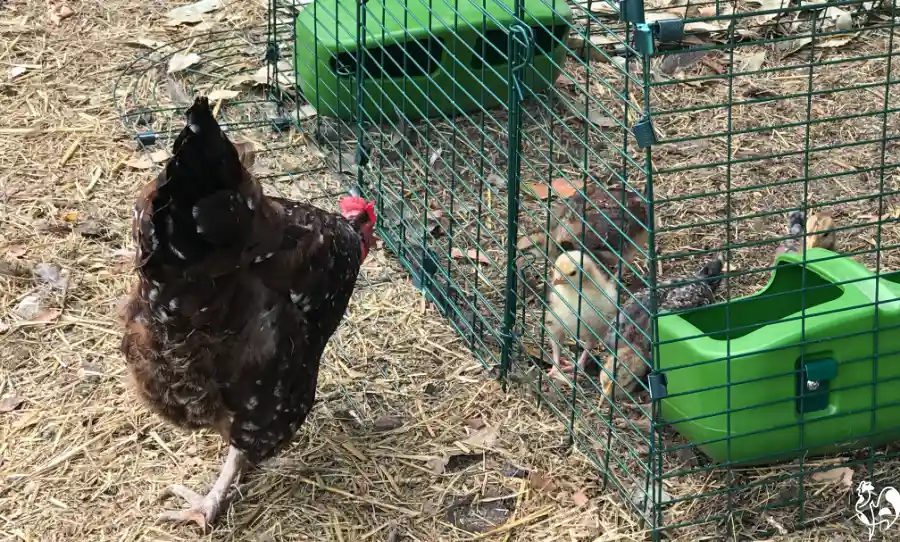
Taking things slowly is key. A longer "see but don’t touch" stage and careful supervision during early interactions can make a big difference.
If your chicks are ready to move out of the brooder but not quite ready to mix fully with the flock, keeping them in a separate pen within sight and sound of the others is often a good middle step.
If you'd like more detailed guidance, I've written a full article about moving chicks from the brooder and introducing them to the flock.
Final thoughts...
Introducing new chickens to your flock can feel like a big step, but it's one that becomes much easier with a little patience and planning.
I've found that taking things slowly and giving the chickens time to adjust makes all the difference.
In time, what begins as curiosity – and the occasional squabble – settles down into a calm, balanced flock.
A few common questions about introducing new chickens.
How long does it take for an existing flock to accept new chickens?
How long does it take for an existing flock to accept new chickens?
It varies. Most flocks begin to settle within a few days, but it can take as long as a couple of weeks. Taking introductions slowly usually leads to a smoother and faster adjustment.
Can you put new chickens straight in with the flock?
Can you put new chickens straight in with the flock?
That is not something I would recommend. Introducing chickens gradually, starting with isolation followed by a "see but don’t touch" stage, helps reduce stress and prevents serious bullying.
Is pecking normal when introducing new chickens?
Is pecking normal when introducing new chickens?
Yes, some pecking and chasing is completely normal as chickens establish their pecking order. The key is to watch for signs of persistent bullying or injury.
Do I need to quarantine new chickens?
Do I need to quarantine new chickens?
Yes, if they've come from another source. A short quarantine period helps prevent illness or parasites, which may not initially be obvious, spreading to your existing flock.
How do you stop chickens from bullying new chickens?
How do you stop chickens from bullying new chickens?
The most important thing is to take introductions slowly, provide plenty of space, and make sure there are enough feeders and drinkers. If bullying becomes persistent, separate the chickens and try again more gradually.
If it's just one chicken doing the bullying, consider isolating her until she learns some manners.
Learn more about keeping a calm and healthy flock.


- Home
- Beginner's Guide
- Adding chickens

Partner of the Month: Eglu Coop

Popular articles



Copyright © 2012- Raising Happy Chickens: All rights reserved regardless of links or attributions.
I do not SELL ANY PERSONAL INFORMATION FROM THIS WEBSITE. PLEASE SEE My PRIVACY POLICY FOR MORE DETAILS.
Click to see my copyright, privacy and affiliates policies.
Click Here to see my policy about external ads, articles and links.
Click here to contact me.