How to keep your chickens cool when temperatures rise.
Do temperatures soar in your area in the summer? Did you know that excessive heat can kill chickens very quickly?
🪶 Featherlight Takeaways.
Quick insights from this article: especially helpful when hot weather puts your flock at risk of heat stress.
- Chickens can die from heat stress in temperatures over 30ºC (86ºF).
- They have no way of sweating and rely on external methods to stay cool.
- Early signs of heat stress include panting, wing position and pale comb colour.
- We can (and must) help our flock by providing shade, cold water, frozen treats and dust baths.
- Jump to the six practical steps to keep chickens cool.
Chickens are experts at keeping warm in the cold, but heat is a different matter. Once temperatures reach around 30°C (86°F), many chickens begin to struggle to stay cool.
And heat stress can be fatal if it's not dealt with quickly.
It's critically important to watch for signs of overheating, and to take action as soon as you spot a problem.
When to act.
Start planning to help your chickens cool down before temperatures get too high. Don't wait until your chickens are already showing signs of heat stress – you're losing valuable time.

It's critically important to know the signs that your chickens are in distress, and what you can do to help. Doing nothing is not an option: chickens die because of heat exhaustion.
Don't just rely on weather forecasts.
Watch for changes in your flock's behaviour. If you see...
🔥 panting through open beaks
🔥 pale combs and wattles
🔥 wings held away from the body...
– it's time to take action.
Need a quick reference guide to overheating signs?
If you're unsure of the symptoms to look for when your chickens are trying to keep cool during summer heat, here are the ten most common signs of heat exhaustion.
Why is heat a problem for chickens?
Poultry don't have sweat glands, so depend on losing heat through their wattles and combs.
But sometimes, that's just not enough.
- They're still just about comfortable at around 24ºC (75ºF) but anything over that and they'll start to feel uncomfortable.
- Once the dial hits 30ºC (86ºF), they need help to remain at a safe body temperature.
- By the time the temperature reaches 32ºC (90ºF) they'll be at serious risk of over-heating. If the weather remains hot and they get no help to keep cool, heat stress will result.
Heat stress can lead to serious problems – and can be fatal.
Could you use a few more summer chicken-keeping tips?
Every summer I send my Chicken Digest subscribers a free printable checklist with 30 simple ways to help chickens stay cool and comfortable during hot weather.
It's full of practical ideas you can dip into whenever temperatures start to climb.
6 simple steps to keep chickens cool in summer.
When temperatures rise, your chickens rely on you to stay safe.
Most of these six simple steps use things you probably already have to hand. The important thing is to prepare before the hot weather arrives, so you're ready to help your flock as soon as temperatures start to climb.
If you're looking for something in particular, use these links to get to that section. Otherwise, scroll on!
Want to watch these tips instead?
Here's a video summarising some simple, inexpensive steps I use to keep my flock hydrated on hot days.

1. 🚰 Make sure they have plenty of cold, clean drinking water.
In hot weather, chickens can drink several times more water than usual.
- Change water often: ensure a constant supply of cold, clean water, even if it means changing it several times each day.
- Use shallow, shaded containers: metal heats quickly, so keep metal bowls in the shade – and remember the sun moves, so check at different times of day.
- Consider using several small bowls instead of one large one, placed around the run so chickens don’t have to go far.
- Use food safe materials only: avoid using plastic that's not labelled food safe: chemicals can leach into the water.
- Try a cooling stone or ceramic bowl like this one. These materials keep cool for longer.
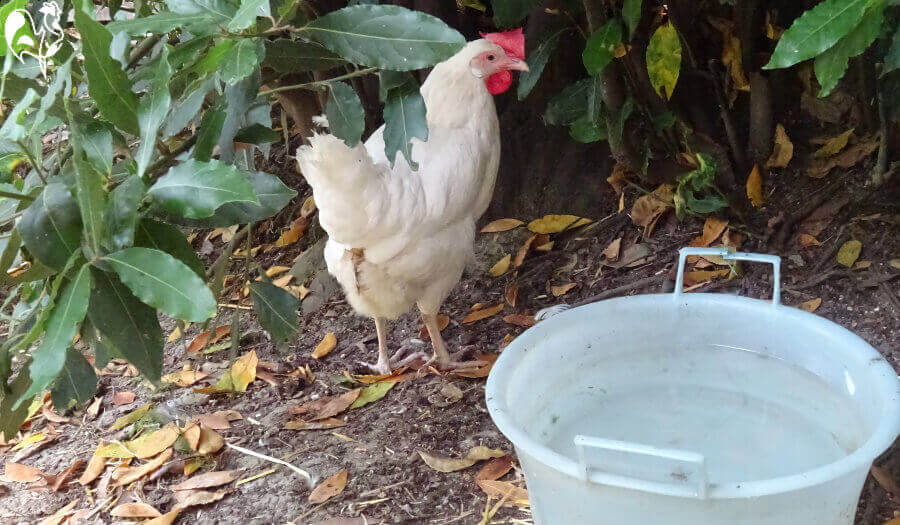 One of my Livornos comes out from underneath the shady bay tree for a cooling drink from a large food bowl.
🧊 Cooling water tip:
- Put a large ice block in a shallow dish. Frozen water bottles or used milk cartons work well. It will melt slowly in the heat and keeps the water cooler for longer.
🛑 Important: avoid apple cider vinegar in heat.
Apple cider vinegar can be helpful in winter, but in hot weather it raises chickens' metabolism which in turn raises their temperature.
Apples are fine, but skip the Apple cider vinegar when it's hot.
2. 🧋 Use electrolytes to help keep chickens cool.
If your chickens show signs of overheating, adding electrolytes to their water helps them rehydrate quickly.
Think of electrolytes as a chicken-friendly form of Gatorade – without the added sugar and colouring.
They help replace vital minerals and vitamins lost during heat stress.
- Only use when needed, not every day
- Too much salt can be harmful, so follow a proven recipe
- Try my simple homemade electrolyte mix here.
3. 🍉 Use juicy fruits (in moderation) helps chickens cool naturally.
During summer, water-rich fruit is plentiful in the shops and, if you're lucky, on your own trees! They're a healthy, hydrating treat.
Watermelon is one of the best options because:
- it's over 90% water with no fat, very little salt
- it's rich in vitamins and antioxidants
- chickens ingest the liquid naturally as they peck.
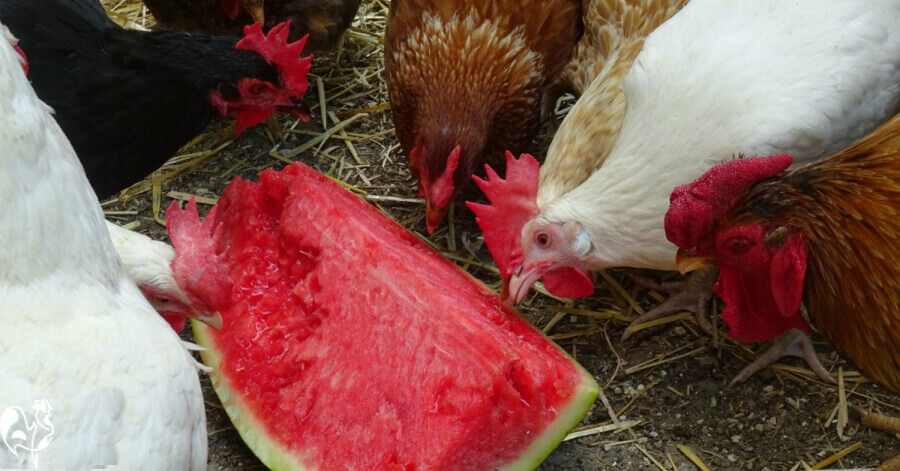 Watermelon is a particularly good food for hydrating your flock.
- Read my guide to feeding watermelon to chickens for tips on which part of the watermelon is best, plus two flock-friendly recipes.
- Other fruits like pears, strawberries and figs are also good choices, but offer fruit in moderation to avoid messy droppings.
4. 🥶 Freeze summer veggies for a cool, long-lasting treat.
Frozen treats are a great way to keep your chickens cool and hydrated, especially in extreme heat.
This easy trick not only cools them down, but keeps them busy during the hottest part of the day.
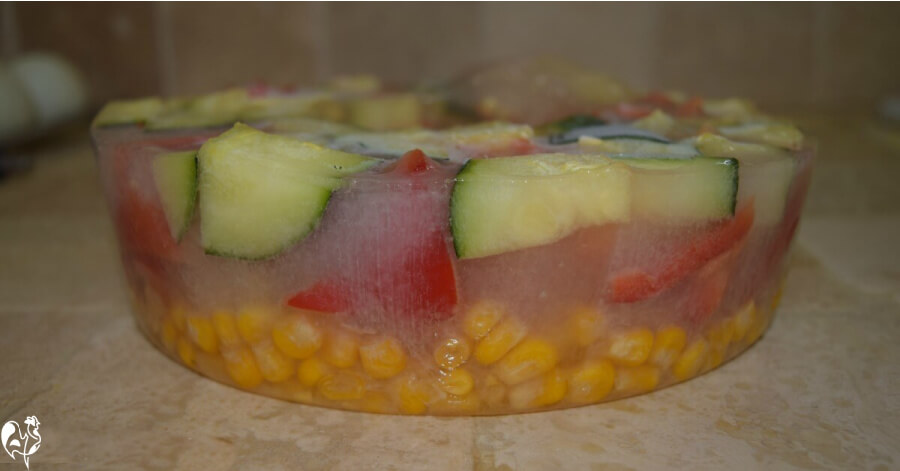
Here's how to make a frozen veggie block (it's really not rocket science...).
- Use water-rich vegetables like...
🍅 tomatoes (yes, they're safe apart from the tomato vine)
🥒 cucumber
🌽 sweetcorn (sweetcorn (avoid feeding cracked corn in hot weather – it's better suited to colder conditions))
🥕 shredded carrot
🥬 salad leaves
- Place in a bowl or mould, add water, freeze overnight.
See my step-by-step guide to making the frozen veggie treat my own chickens love.
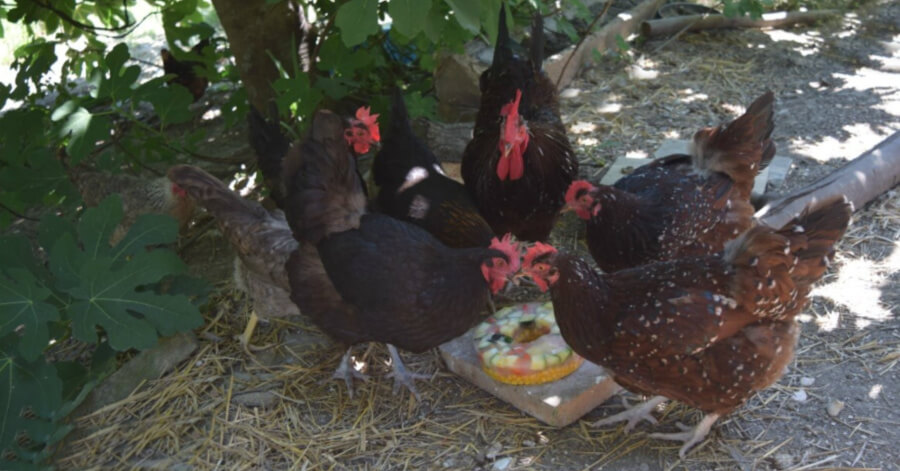 My chickens like to be first to the table when a frozen veggie treat is on the menu!
5. 🛁 Provide dust baths to help chickens keep cool (and mite free).
Dust baths serve two purposes. They:
- help keep chickens cool in heat by regulating their body temperature
- naturally control warm weather parasites like lice and mites.
Easy and inexpensive dust-bath set-ups include:
- children's sand-pits
- old, used car tyres
- shady patches we can provide, like umbrellas or the shade of trees (my chickens love the area under our fig tree).
Bonus tips...
- Make sure your summer dust baths are always in the shade. Chickens will use them more often and stay cooler for longer.
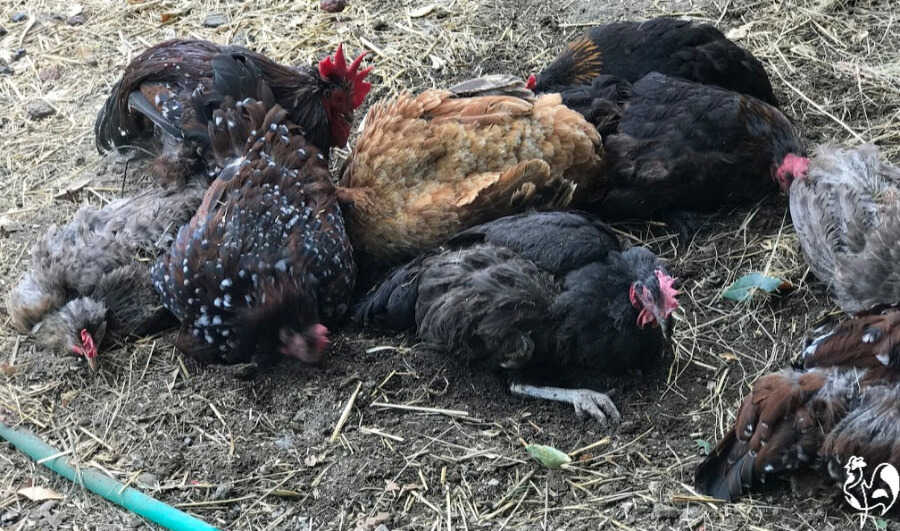 Dust bathing in the shade of the fig tree. The pipe is a sprinkler system.
- See the photo above – I added a home made sprinkler system to my run using an old hose pipe with pinholes made at intervals. My flock love it during extreme heat.
- Or try a ready-made sprinkler – this one works well (affiliate link)
6. 🏡 Keep your coop cool with ventilation and summer bedding.
Your flock may enjoy being outside in hot weather, but they need a cool, healthy coop to retire to, especially at night.
🌬️ Ventilation matters.
- Make sure ventilation is above chicken head height. Hot air rises, and good circulation helps it escape while keeping chickens safe from drafts.
- If your coop has power, install a small fan to boost air movement. Something like this (affiliate link) is perfect – but make sure both fan and wiring are out of reach.
- Keep coop doors open during the day to allow heat to escape.
🏖️ Try swapping your bedding for sand in hot weather.
- While deep litter helps in winter, construction sand (also called "river sand" or "washed sand") is a better choice in summer.
- Avoid play sand – it's too fine and can cause respiratory problems.
- It also reduces disease risk and deters flies – as long as you scoop droppings daily.
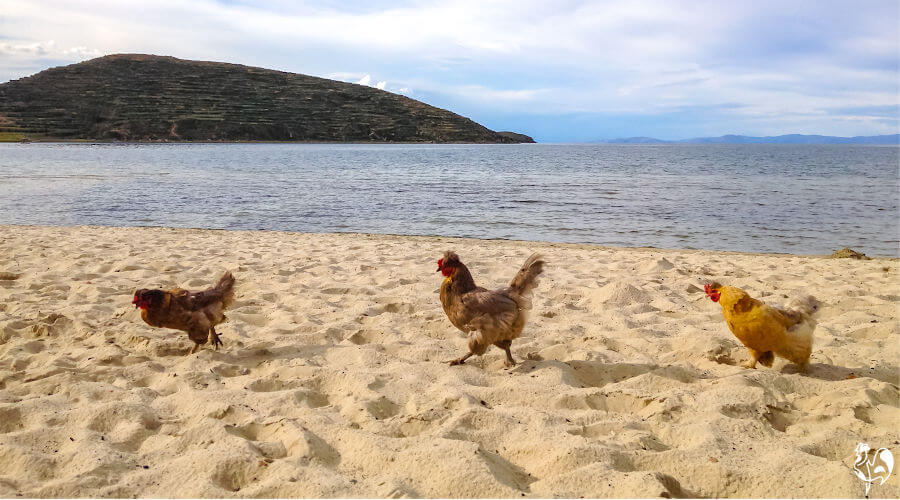 Give your chickens a day at the beach by using sand in their coop!
By preparing ahead with these simple steps, you'll give your flock the best chance of staying comfortable even during hot weather.
Want my printable, 30-step cooling checklist?
Frequently Asked Questions.
What temperature is too hot for chickens?
What temperature is too hot for chickens?
Most chickens start to feel stressed at 30ºC (86ºF), and heat exhaustion becomes dangerous at 32ºC (90ºF) or above.
What are the signs of heat stress in chickens?
What are the signs of heat stress in chickens?
Early signs include panting, pale combs, and holding wings away from the body.
For full details, see my article about the signs of heat exhaustion in chickens.
Should I put a fan in my chicken coop?
Should I put a fan in my chicken coop?
Yes, if you have power in the coop this can be a good solution, if...
- the fan can be placed above chicken head height
- the wires can be kept out of the way of pecking beaks!
Try putting a tray of ice cubes in front of the fan. It will cool the circulating air.
Can chickens drink water with ice in it?
Can chickens drink water with ice in it?
Yes. Iced water is safe and can help them stay cool. Make a large ice block by freezing an almost full water bottle and add to the drinking bowl to keep water cold for longer.
Is it safe to give chickens fruit in the summer?
Is it safe to give chickens fruit in the summer?
Absolutely. Watermelon is one of the best fruits for hydration as it's over 90% water.
Avoid overfeeding sugary fruits like strawberries or pears, which can give the chickens runny poop.
Is Apple Cider Vinegar good to use in hot weather?
Is Apple Cider Vinegar good to use in hot weather?
No.
Apple Cider Vinegar raises metabolism, which can make chickens hotter. Save it for cooler months – read why, and how to feed it, here.
What’s the best bedding for chickens in summer?
What’s the best bedding for chickens in summer?
Builders sand is ideal, even for very young chicks in the brooder: it stays cool, deters flies, drains well, and doubles as a dust bath.
Avoid fine play sand — it's too dusty and can create problems with the chickens' respiratory system.
Here are some other articles you'll find useful for summer chicken care.







Sources.
A lot of "facts" you'll find on the internet are often people's individual views, based on inaccurate information repeated from poor quality sources.
The information I provide in this article and others is based not just on my own experience, but on evidenced facts from scientific, peer-reviewed research and books from highly respected and experienced poultry keepers such as Gail Damerow.
Some of the trusted sources I have used in this article are these.
1. S. F. Bilgili et al: "Sand as litter for rearing broiler chickens". Pub. Journal of Applied Poultry Science, 1999.
2. B.D. Bowers et al: "Sand litter temperatures during brooding". Pub. Oxford University Press, 2003.
3. V. A. Toroc et al: "Influence of different litter materials on cecal microbiota colonization in broiler chickens. Pub. Oxford University Press - Poultry Science, 2009.

Partner of the Month: Grandpa's Automatic Feeder
Popular articles



Copyright © 2012- Raising Happy Chickens: All rights reserved regardless of links or attributions.
I do not SELL ANY PERSONAL INFORMATION FROM THIS WEBSITE. PLEASE SEE My PRIVACY POLICY FOR MORE DETAILS.
Click to see my copyright, privacy and affiliates policies.
Click Here to see my policy about external ads, articles and links.
Click here to contact me.