Rats, mice and your chickens: 5 ways to keep them apart.
Rats and mice: the very words send shivers down the spine, and finding them around your chicken coop is that last thing you want.


They say that prevention is better than cure. And when it comes to rodents around chickens, a few sensible precautions can make your coop and run much less attractive to them.
It happens to the best of us. Ask me how I know.
I've drawn on my own experience of a rat infestation (and the odd mouse), discussions with professional pest controllers, and research studies to share with you five practical ways to make your chicken coop less inviting to rodents.
It also looks at some less effective ways you may have heard of.
Please note: this page contains pictures of rats and mice. If you're uncomfortable with that, you may prefer not to read any further.
🪶 Featherlight Takeaways.
Quick insights from this article: especially helpful if you quickly need to know how to reduce the chances of rats or mice becoming established around your chicken coop, or stop them returning after you've dealt with an infestation.
- Make food difficult to reach. Store chicken feed securely and don't leave easy meals available overnight.
- Reduce hiding places. Long grass, dense vegetation and clutter around the coop can give rodents somewhere to shelter and move unseen.
- Keep the area clean. Spilled feed and other food waste can make your chicken area attractive to rats and mice.
- Think beyond the coop. Compost heaps and the surrounding garden can provide food and shelter too.
Prevention is much easier than dealing with an established infestation but if it's too late for that, use this button link to my article about ways to get rid of rats.
When are rats and mice most likely to invade?
Rats and mice are attracted to places where they can find the things they need: food, water and shelter.
And unfortunately, a chicken coop can provide all three.
Feed is the obvious attraction, particularly when it's spilled or left where rodents can reach it. But compost heaps, rubbish, dense vegetation, clutter and sheltered nesting places around the coop can also make the area attractive.
Where I kept chickens in rural Italy, the surrounding farmland also played a part. Wheat and sunflower fields provided plenty of food at some times of year, and I noticed greater pressure from rodents when those natural food supplies became less readily available.
In towns and cities the surroundings may look very different, but the principle is the same: if rats can find reliable food and somewhere safe to shelter, they have a reason to stay.
 Even a discarded takeaway cup can provide a meal for a hungry rat.
So prevention isn't about whether you keep chickens in the country or the city. It's about making your chicken area as unrewarding to rodents as possible.(3)
These are the five steps I'd start with.
Links on the rest of this page are "affiliate links". If you click on them and buy, I earn a small commission at no cost to you. I only recommend products I know and love and which I think will be genuinely useful to you. See my disclosure policy for more information.
Step 1: Store all chicken feed in a secure container.
Rats and mice have an excellent sense of smell, are capable of gnawing through many materials and can climb surprisingly well.
 Rats are excellent climbers: even bird tables and hanging feeders can give them access to food.
That's why storing chicken feed somewhere high up, or simply leaving it in its original bag, isn't enough to keep it safe.
The container itself needs to be rodent-resistant, with a lid that closes securely.
I learned the hard way to store chicken feed in galvanised metal bins with tightly fitting lids. I use bungee cords to secure the lids to the handles, preventing them being pushed off.
I have used those bins for more than ten years without finding a single rat or mouse inside. They have become a little rusty with age, but they continue to do their job.
These are the kind of galvanised metal bins I use to store my feed.
🐥 A note from my flock:
I learned the hard way that not every container described as "tough" is rat-proof!
I once stored our chicken feed in a heavy-duty plastic container, convinced it would do the job.
Then I noticed how quickly the grain was disappearing. I assumed Mike had been giving the chickens extra feed without telling me.
He hadn't. The rats had found their way in.
That's when I decided it was time to invest in galvanised metal bins!
How to choose a feed container.
Choose a sturdy container without gaps or openings (even tiny openings like a pedal which opens the lid) that rodents could exploit, and make sure the lid fits tightly and can be secured.
Don't rely on a container simply because it's described as strong or heavy-duty. Check that it's genuinely suitable for protecting animal feed from rodents.
Rats are canny. If there's food and a way to access it, they will find it.
Step 2: Use a treadle feeder.
Imagine my horror when I opened my chickens' feeder to fill it one day and saw this inside...
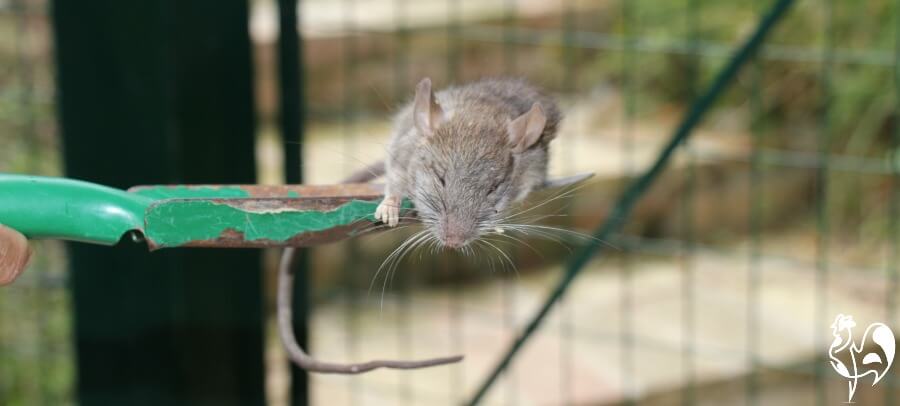
Yes, that's a rat, and he had been partying in my chicken feeder.
The feeder was hanging off the ground at chicken head height, and I'd assumed it was secure. Clearly, I was wrong.
Quite apart from the unpleasant surprise, I was concerned about the risk of contamination from droppings and urine. I certainly did not want my chickens eating contaminated feed.
That's when I decided to invest in a treadle feeder.
A treadle feeder opens when the chicken steps on a platform, and closes when it steps away. This makes the feed much less accessible to rats, mice and wild birds than it is in an ordinary open feeder.
I chose Grandpa's Automatic Feeder. It was expensive, specially because in those days before it was widely available, I had to have it imported to Italy.
But it turned out to be one of the best purchases I have ever made for my flock.
Combined with metal storage containers, it made a huge difference. I have not found any further evidence since then of rats getting into the feed and, as a bonus, far less feed is wasted.
I've written a detailed review based on over 15 years' experience with Grandpa's Feeder, including its advantages and disadvantages, and whether it works for different types of chicken.
Read my long-term review of Grandpa's Automatic Feeder.
Step 3: Manage your compost heaps.
One of the things I love about gardening is making my own compost. There's something very satisfying about turning garden waste, chicken bedding and droppings into beautiful, rich compost soil ready to improve the soil and help next year's fruit and vegetables grow.
Re-cycling at its best!
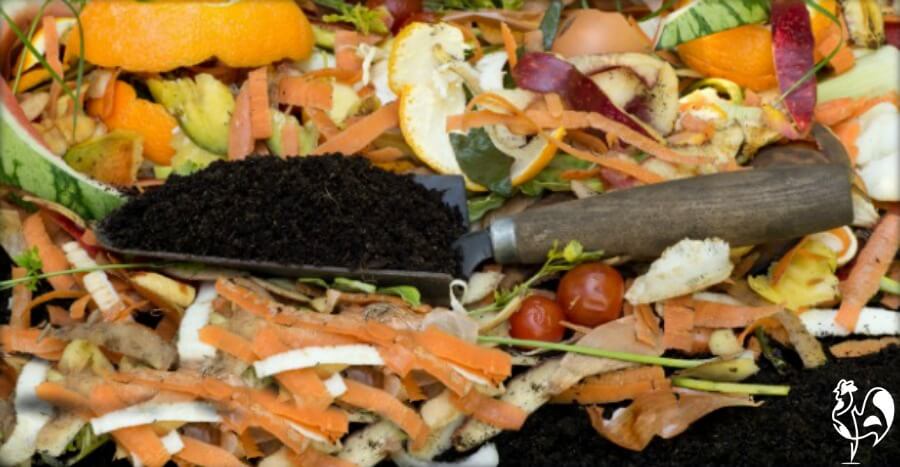 Soil from my tumbling compost bins.
Unfortunately, rats and mice appreciate a compost heap almost as much as I do. It can provide them with food, warmth and somewhere sheltered to nest.
But there's no need to give up composting. Just make your compost less welcoming to rodents.
Here are some simple precautions I follow:
- Keep cooked food, meat, fish and dairy products out of compost heaps. They can attract unwanted visitors.
- Be careful with fruit and vegetable scraps. They can also provide food for rodents, so use a secure container and cover fresh scraps with other compost material.
- Use open heaps mainly for garden waste. Leaves, grass clippings and dead plants are all good. Chicken bedding and droppings can also be composted, provided the compost is allowed to mature before use.
- Consider a raised tumbling composter if you are going to use kitchen scraps. Keeping the contents enclosed and off the ground makes them harder for rodents to reach. Look for securely closing access panels and ventilation holes too small for rodents to enter.
- Check and turn your compost regularly. This helps the composting process and makes it less attractive as an undisturbed nesting place.
🐥 A note from my flock:
I've used two raised tumbling composters for about four years now, and I've never found any evidence of rats or mice getting into either of them.
They're not advertised as being rat-proof, but I prefer keeping fruit and vegetable scraps enclosed and off the ground rather than leaving them on an open heap.
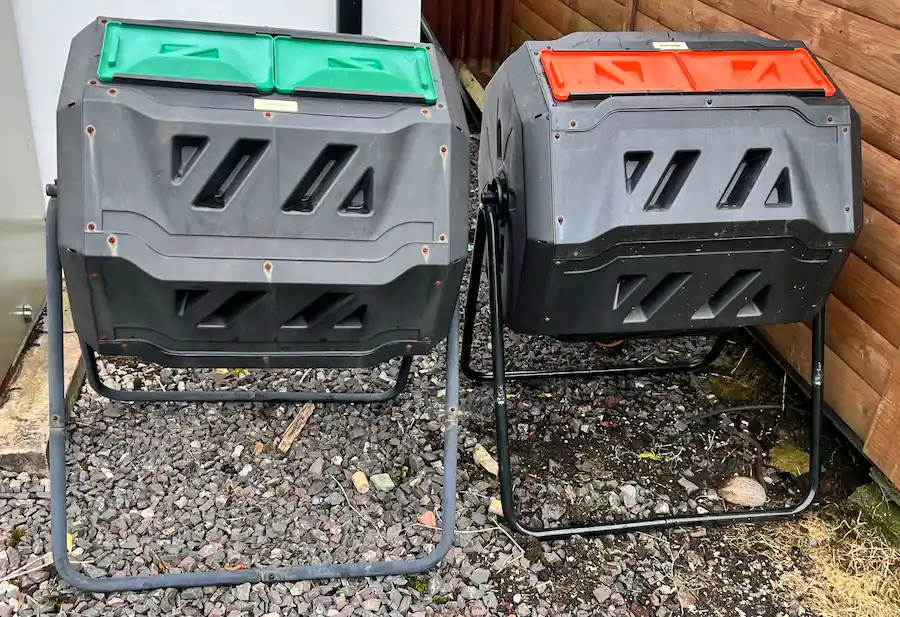 My two 'Outsunny' tumbling composters. Four years of use, and no sign of rodents getting inside.
I also prefer to keep compost bins away from the chicken run, rather than putting two potential food sources close together.
The aim isn't to stop composting. It's to make sure your compost is feeding your garden, not the local rat population!
Step 4: Keep your coop and run clean.
We all like to give our chickens a treat from time to time, and scattering a few goodies around the run gives them something enjoyable to scratch for.
Mine have definite favourites, mealworms and sweetcorn being top of the list.
There's nothing wrong with offering occasional treats, but anything left on the ground can become an attraction for rats and mice.
A few simple habits can make a big difference:
- Offer scattered treats early in the day so that by roosting time it's all eaten.
- Clear away all uneaten food before roosting time. Check around feeders and remove any spilled feed.
- Keep coop bedding in good condition. Check for signs of rodents when cleaning, especially in corners and in nest boxes.
- Collect eggs regularly. Rats are partial to an occasional fresh egg!
I learned the nest box issue the hard way.
When I had my rat infestation, I discovered a nest of rats tucked into the straw near my nest boxes. They'd found themselves somewhere warm, sheltered, and with a ready supply of food nearby.
Trust me, that's not something you want to find in your own chicken coop!
Step 5: Trim grass and shrubbery around your coop and run.
Rats hate open spaces. They prefer to move under cover, rather run across open ground where they may be exposed to predators.
If you've ever come across a well-used "rat run" you'll have noticed that it tends to follow fences, hedges and walls – the edge of boundaries.
Dense vegetation, long grass and neglected corners can provide shelter and make it easier for rodents to move around without being noticed.
That's why it's worth keeping the area immediately around your chicken coop and run as clear as possible.
- Cut back long grass and overgrown shrubs near the coop, especially where they provide sheltered routes to feeders.
- Remove clutter such as old containers, discarded materials or any other equipment which could provide a hiding place.
- Check along fences, walls and the base of the coop for burrows, tracks or other signs of rodent activity.
- Keep an accessible strip around the coop if possible, so you can easily inspect it and spot potential problems quickly.
Our aim isn't to turn the garden into a bare patch of earth! Trees, shrubs and wildlife-friendly planting have their place.
The aim is simply to avoid providing rodents with a sheltered route straight to the fast-food takeaway of our chickens' grain.
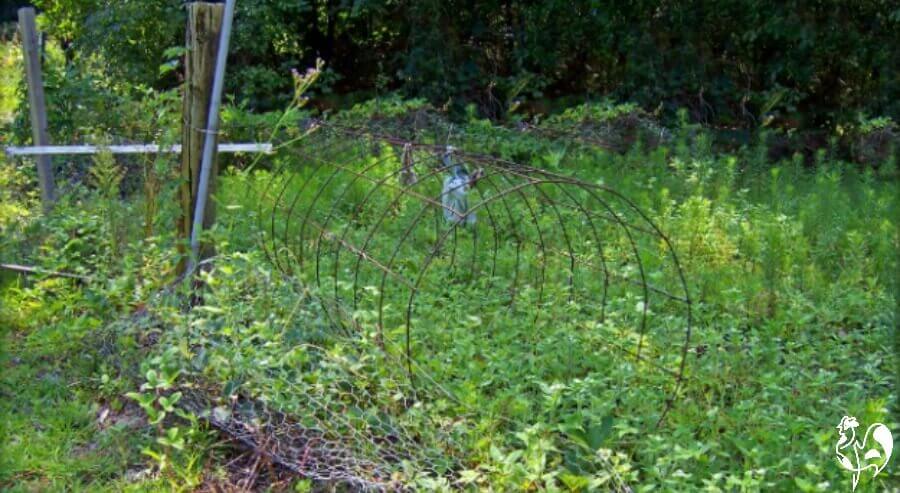 Overgrown grass, neglected structures and clutter can provide useful hiding places for rodents.
So remember ...
Keeping rats and mice away from chickens is largely about making their surroundings less inviting.
Store feed securely, clear away leftovers, manage any compost and keep an eye on places where rats might hide or nest.
None of these steps guarantee that you'll never see a rat or mouse around your coop. But together, they make them a much less attractive place for rodents to settle.
And finally, when someone tells you they won't keep chickens because they'll attract rodents, here's what I say:
It's not the chickens themselves that attract rats and mice. It's the food, water and shelter available around them.
And those are things we can do something about.
Want more practical advice about rats and mice?
My Chicken Digest newsletter includes practical chicken-keeping advice, seasonal tips and occasional free resources, including printable checklists.
If you'd like to receive future editions, I'd love you to join my friendly chicken community.
More help with rats and mice around the chicken coop.

Sources.
A lot of "facts" you'll find on the internet are often people's individual views, based on inaccurate information repeated from poor quality sources.
The information I provide in this article and others is based not just on my own experience, but on evidenced facts from scientific, peer-reviewed research and books from highly respected and experienced poultry keepers such as Gail Damerow.
Some of the trusted sources I have used in this article are these.
My pages about rats are, unfortunately, written from personal experience. However, I have also referred to various knowledgeable sources, including :
1. Mr Darren McKellar, Pest Control and Clinical Waste Manager at the London Borough of Lewisham, UK, who was kind enough to give me advice as well as permission to use the very helpful graphics on some of my other rodent pages.
2. The US Centers for Disease Control and Prevention have been extremely helpful in identifying disease and illnesses caused by rodents.
3. Himsworth et al: A Mixed Methods Approach to Exploring the Relationship between Norway Rat (Rattus norvegicus) Abundance and Features of the Urban Environment in an Inner-City Neighborhood of Vancouver, Canada. Pub. National Center for Biotechnology Information, 2014.

Partner of the Month: Eglu Coop
Popular articles


Copyright © 2012- Raising Happy Chickens: All rights reserved regardless of links or attributions.
I do not SELL ANY PERSONAL INFORMATION FROM THIS WEBSITE. PLEASE SEE My PRIVACY POLICY FOR MORE DETAILS.
Click to see my copyright, privacy and affiliates policies.
Click Here to see my policy about external ads, articles and links.
Click here to contact me.