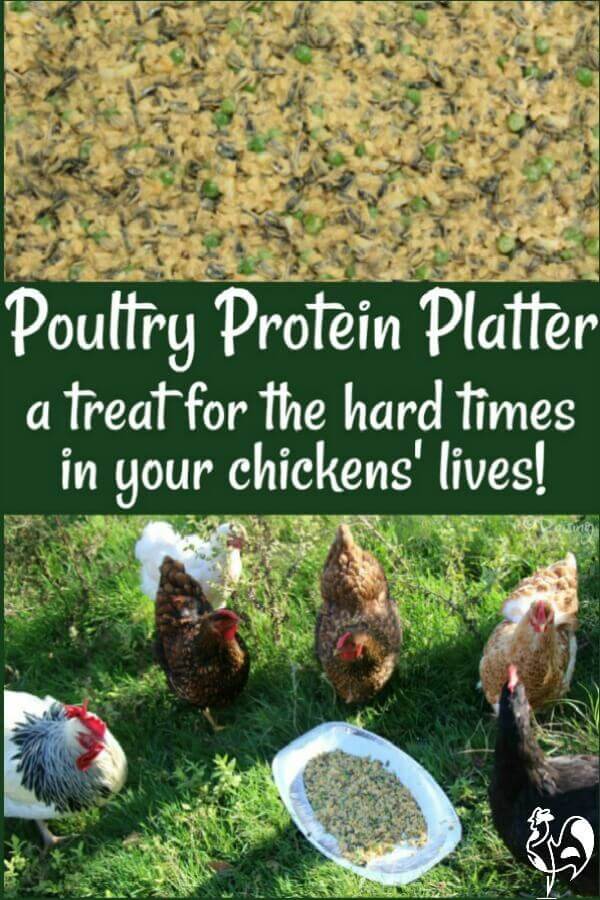
A high-protein chicken treat your flock will love: my Poultry Protein Platter.
There are times in a chicken's life when a little extra nutritional support can be helpful.

Late winter, the stress of moulting, broody periods, or simply coping with cold, damp conditions can all take a toll on your flock's energy levels and overall condition.
During those times, a carefully chosen high-protein treat can offer support. It's not to force laying or "fix" anything, but to help chickens get through a demanding phase more comfortably.
My Poultry Protein Platter is one of my own, go-to recipes when my flock needs a short-term boost.
It's easy to make, inexpensive, and uses ingredients many of us already have to hand. I don't make it often, but when it's needed, it is always enthusiastically received!
Below you'll find the full recipe with exact amounts and simple step-by-step instructions.
First, though, there's one point worth keeping in mind.
An important note about concentrated high protein treats.
It's important to make sure your chickens tuck into some well balanced food before they make themselves too full with this.
It's also important that their diet is supplemented with other, low fat, healthy treats.
Overloading them with protein will not help them in the end: it can cause serious problems with the liver and kidneys.
Be sure you offer this kind of treat only when there's a specific need, and even then, no more than two or three times a week.
There’s nothing magical about this recipe. You’ll find plenty of similar ideas online and in books.
The key is to combine a variety of well-documented protein sources, using ingredients that are inexpensive, easy to find, and appropriate for short-term use when chickens need extra support.
This is my own Poultry Protein Platter recipe, but it isn’t fixed. I vary it depending on what I have available, and you should feel free to do the same.
Below are the ingredients I use most often — and why.
What's in this yummy treat, and why?
There's nothing magical about this recipe. You'll find plenty of similar ideas online and in books.
The key is to combine a variety of well-documented protein sources using ingredients which are inexpensive, easy to find and which you may well already have in your kitchen cupboard.
This is my own Poultry Protein Platter recipe, but it isn't fixed. I vary it depending on what I have available, and you should feel free to do the same.
Below are the ingredients I use most often, and why.
Dry ingredients.
Cayenne pepper.
This often surprises people, but I add cayenne because it's traditionally thought to support circulation and metabolism. Whether it truly speeds metabolism is open to debate, but it does no harm in small amounts.
Despite some online myths, it won't make eggs taste spicy, and chickens have very few taste buds, so it doesn't cause discomfort.
Eggshells.
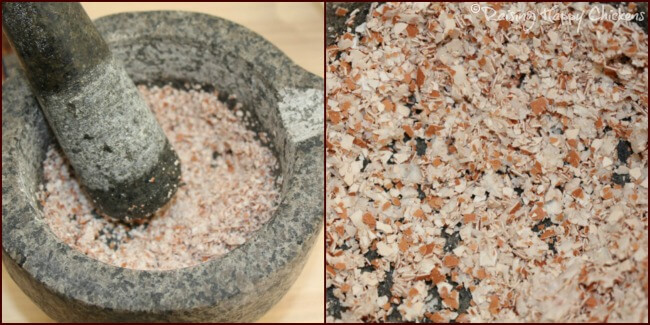
I use my own eggshells, baked for ten minutes and ground into a fine powder, to provide a little extra calcium.
Chickens don't recognise baked, powdered shells as eggs, so this won't encourage egg eating.
Oats.
I use plain, whole oats rather than the quick or highly processed varieties. They're simple, natural, filling, and easy for chickens to digest.
Sunflower seeds.
Whole black sunflower seeds are an excellent protein and fat source. I grow my own, but shop-bought seeds work just as well.
Peas.
Fresh peas are ideal when available. At other times of year, frozen peas work well, and a can of unsalted sweetcorn is a good alternative.
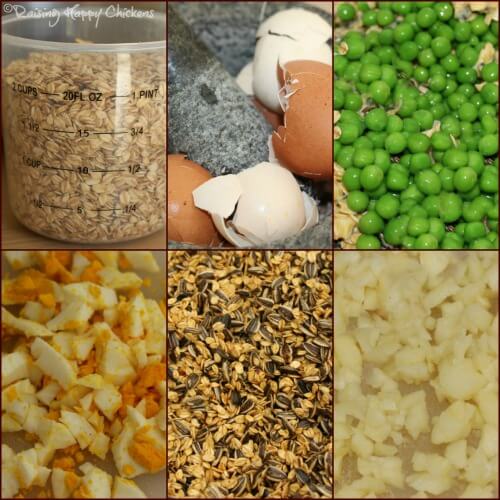 Some of the possible ingredients for the Protein Platter chicken treat.
Wet ingredients.
Cooked eggs.
Hard-boiled eggs, chopped finely, are easy to use. Scrambled eggs also work well and help bind the mixture together.
Avoid using raw eggs, as this can encourage egg eating. When scrambling, don’t add milk : chickens don’t digest dairy products well.
Fish.
This is the most popular ingredient with my flock.
Fresh sardines are ideal and can be mashed whole, including the soft bones. If using canned fish, choose sardines in oil rather than brine, which is too salty.
Garlic.
Garlic is a natural source of vitamin B6 and is well known for its antibacterial properties and immune support.
Despite persistent myths, it does not affect the taste of eggs. And it's easy to grow, even in pots, which makes it a convenient ingredient to have on hand.
Olive oil.
I use extra-virgin olive oil because it's readily available to me, but sunflower oil works just as well. Whichever you choose, make sure it's non-GMO.
Yoghurt.
Many high-protein chicken treat recipes use natural yoghurt as a binding agent because of its probiotic content.
However, chickens don't digest dairy particularly well. If you use yoghurt, choose a plain, unsweetened variety and use it sparingly.
A better solution is to add some probiotic powder (see below) mixed with water.
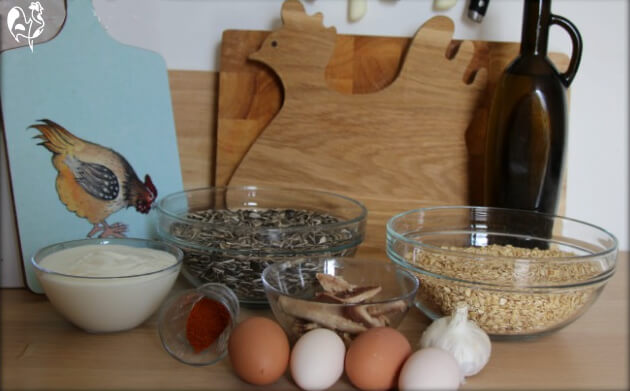 Some of the ingredients for the protein platter treat.
A word about probiotics.
I don't use medicated feed for my flock, but I do like to support digestive health with natural options.
Probiotics help maintain a healthy balance of gut bacteria, which supports digestion and overall health. I keep a poultry-specific probiotic supplement (affiliate link) in stock and use it mixed with water as a binder in this recipe.
If I don't have probiotics available I will use plain yoghurt instead, but always in small amounts.
High protein chicken treat: amounts.
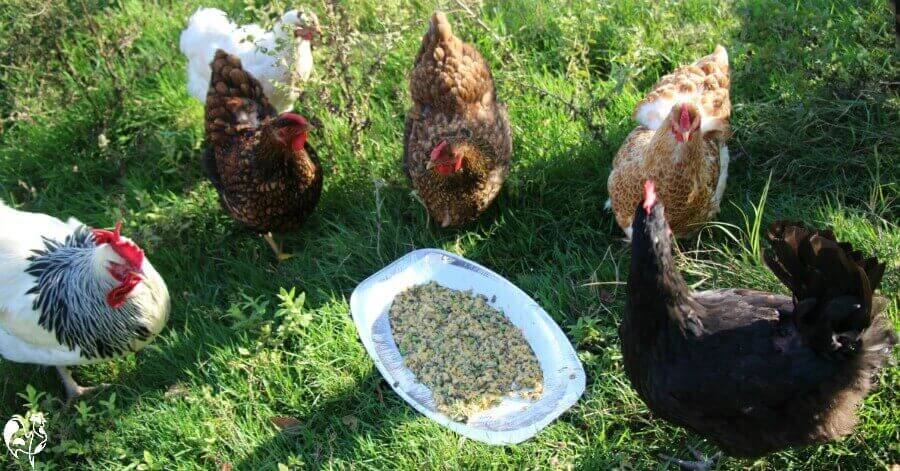
🐥 A note from my flock: as you can see, there's always a rush in my flock to get to the Poultry Protein Platter first!
Because this is a concentrated, high-protein treat, a little goes a long way.
I usually make two or three times what I need and store the rest in the fridge or freezer, depending on how quickly I plan to use it. The quantities below will feed around 15 chickens on two occasions.
Between feeds, keep the mixture in an airtight container in the refrigerator.
|
2 cups oats 1 cup sunflower seeds 1 cup peas (fresh or frozen) 2 cups / 20 fluid oz / 500 mls probiotic supplement mixed with water (use about 1/3 teaspooon to 1 pint water) or 2 cups/20 fluid oz/500 mls plain yoghurt. |
4 eggs 12 fresh sardines or 2 tins sardines in sunflower oil 2 tablespoons Cayenne pepper 6 cloves fresh garlic. |
How to make the Poultry Protein Platter.
- Chop the garlic finely.
- Mash the fish, leaving the soft bones in.
- If using frozen peas, boil them just long enough to defrost, then strain. Keep the water to one side.
- Hard-boil the eggs, chop them into small pieces, and set the shells aside.
- Bake the eggshells for ten minutes, allow them to cool, then crush into a fine powder. A pestle and mortar works well, but a rolling pin and freezer bag are fine too.
- In a large bowl, mix together the oats, sunflower seeds, and cayenne pepper.
- Add the crushed eggshells, chopped eggs, fish, garlic, and peas, and mix thoroughly.
- If using yoghurt, add it now. If using probiotic powder, add it and use the reserved pea water to moisten the mixture.
- The final texture should be firm but not stiff, similar to a cake mixture.
- Spread the mixture onto a tray, offer it to your flock, and stand well back to avoid the rush!
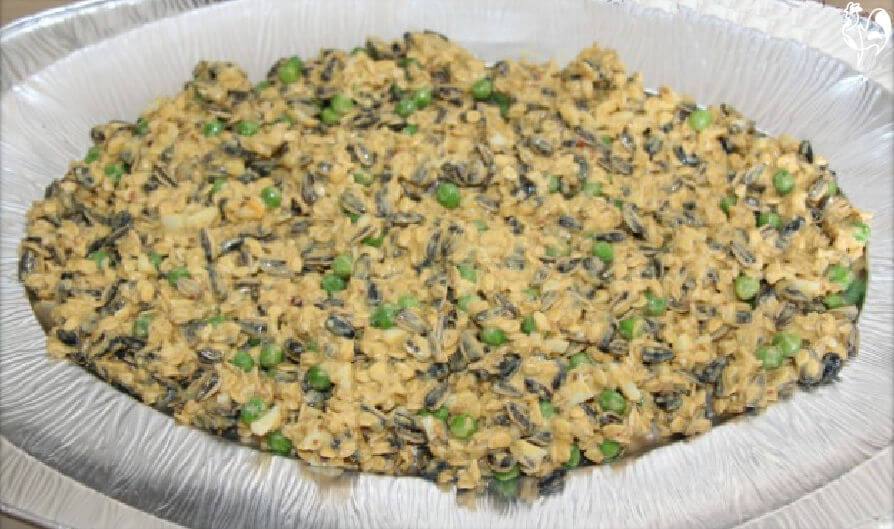 The finished dish - yum!
Storage notes.
If you've made more than you need, the mixture will store well:
- in the fridge for up to one week, or
- in the freezer for up to two months.
A final word about high protein treats.
This Poultry Protein Platter is just one option, and it's meant to be used thoughtfully.
- High-protein treats are best kept for specific situations: moulting, cold winter weather, recovery from stress, or times when natural foraging is limited. Given occasionally and in sensible amounts, they can help support your flock through more demanding periods.
- As always, variety matters. Feel free to adapt my Poultry Protein Platter recipe using other suitable ingredients, and pay attention to how your own chickens respond.
- And remember: good quality feed, fresh water, and a steady routine will always matter more than any single treat.
Did you know some plants are good for chicken health, too?
Here's a short video of my favourite flowers for the garden - and for my chickens' health.
Low in fat, high in beneficial nutrients, excellent as immune system boosters and best of all, easily grown in your garden! Try some now!
My favourite books about making sure your chickens are as healthy as can be!
I have all these books and have learned a huge amount from them. If you're looking for detailed, accurate and easy to read sources, start with any one of these!
(These are affiliate links, which means if you click and buy, I receive a small commission at no cost to you).
To see more detail about different types of supplements to a chicken's diet, click on these picture links.

Partner of the Month: Grandpa's Automatic Feeder
Popular articles


Copyright © 2012- Raising Happy Chickens: All rights reserved regardless of links or attributions.
I do not SELL ANY PERSONAL INFORMATION FROM THIS WEBSITE. PLEASE SEE My PRIVACY POLICY FOR MORE DETAILS.
Click to see my copyright, privacy and affiliates policies.
Click Here to see my policy about external ads, articles and links.
Click here to contact me.