Can chickens eat nuts (and other festive foods)?
It's party time. You have a full festive menu worked out for your family. But what about the chickens?
Whether you're planning to share a few festive leftovers, or just wondering which foods from the holiday table are safe to offer, this guide has you covered.

Here you'll find 20 of the most common celebratory foods, from nuts and turkey to sprouts and pie.
They're grouped by course, and checked against properly researched studies for chicken health.
You'll learn which are safe, which are fine in moderation, and which should stay firmly on the human plate.
Before we begin, one quick reminder: chickens aren't people and shouldn't eat like people.
Their main diet should always be a balanced layer feed, with treats offered only once they've had their proper meal, and never more than once or twice a week.
That said, let's ring out the festive chicken treats!

🪶 Featherlight Takeaways.
Quick insights from this article: especially helpful if you're tempted to share your festive feast with your flock.
- Chickens can eat many holiday foods, but moderation matters.
- Avoid anything salty, sugary, or fatty, even if it's homemade.
- Always feed chicken feed first, treats later in the day.
- The best "party" options are fresh vegetables, unsalted nuts, and small amounts of lean meat.
- Friendly reminder: in the UK and EU, kitchen scraps, even home-prepared, aren’t legally allowed for poultry.
Here's what's covered in each section.
Snacks!
Let's start by looking at the nibbles we're likely to have left over after our festivities.
1. Can chickens eat nuts?
Yes, but only plain, unsalted nuts, and in moderation.
Nuts are rich in protein, fibre, and vitamins that help strengthen a chicken's immune system which is especially useful through the colder months. They're one of the few winter treats that provide real nutritional value, not just entertainment.
Chickens can enjoy most types: peanuts, walnuts, and almonds are all safe, healthy choices. Chop them finely and scatter them on the ground, or mix a few into a homemade festive treat.
If you have unshelled peanuts, offer them whole. The shells aren't harmful(1) and cracking them open gives your flock something to do when outside foraging is limited.
A few cautions.
- Always use unsalted nuts: excess salt can lead to shell-less eggs and potentially fatal egg peritonitis(2).
- Keep portions small: the high fat and protein that make nuts healthy in small amounts can cause obesity or sudden death syndrome if fed too often(3).
- Treat nuts as a small handful of festive nibbles, never the main course.
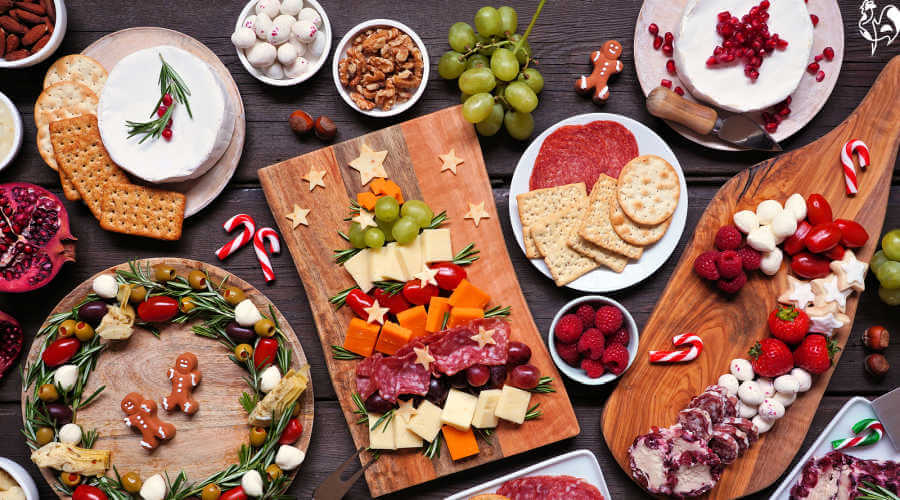 An Italian pre-dinner Christmas table. Very little is good for chickens!
2. Can chickens eat cured meats?
No. Processed meats like salami, pepperoni, and cocktail sausages should stay off the chicken menu.
They may look like easy leftovers, but cured and processed meats are packed with fat, salt, sugar, and preservatives, all of which are harmful to chickens.
Fresh, plain meat is fine (and a good source of protein), but cured or seasoned versions are best left to humans.
Healthier festive swaps:
- Offer plain cooked turkey or chicken instead. Both are lean, protein-rich options.
- Trim off any visible fat before giving leftovers to your flock.
- Avoid anything smoked, salted, or spiced.
3. Can chickens eat devilled eggs?
Yes, but only occasionally, and without the mayonnaise.
Eggs themselves are a great source of protein (around 6–13%) and rich in vitamins A and E, both of which support poultry health.
And feeding cooked eggs won't make your chickens start eating their own raw eggs. That’s an old myth!
The problem comes from the devilled part. Mayonnaise and similar dressings are high in saturated fat, which can lead to obesity and liver problems if given too often.
A safer way to share:
- Offer small pieces of plain, hard-boiled egg instead.
- If you'd like a special treat, try my simple version of devilled eggs without mayo.
- Never serve eggs seasoned with salt or rich sauces.
4. Can chickens eat bread and crackers?
They can, but bread and crackers offer little nutrition and should only be occasional treats.
Chickens love both, but that doesn't mean they're good for them. Bread contains almost no useful nutrients for poultry and is often high in salt, which can harm chickens if fed regularly(2).
Crackers are generally even saltier.
Things to remember:
- Never feed mouldy bread, or any type of rotten food.
- Avoid crackers, and bread with added fats, sugar or seasoning.
- Keep portions small and infrequent. Bread is a filler, not a feast.
🐥 A note from my flock: a small amount of bread fed occasionally won't cause problems, and bread can help bulk out a winter "pot luck" recipe.
I sometimes soak stale bread I have left over in warm water (not milk, because chickens have difficulty processing dairy products) for my flock and, as you can see, they love it!
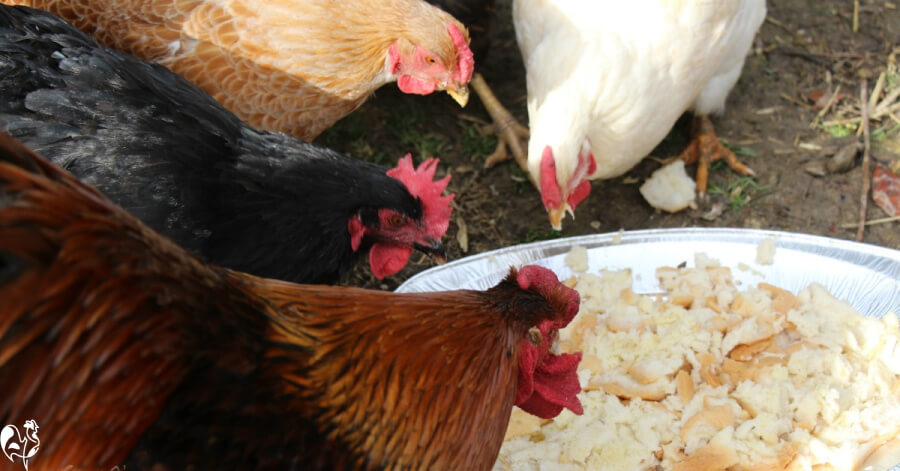 My chickens enjoying a plate of stale bread soaked in water.
Starters.
5. Can chickens eat seafood?
Yes. Fresh seafood makes a healthy, protein-rich treat for chickens.
Fish and shellfish such as shrimp, crab, prawns, langoustines and mussels are excellent sources of protein and Omega-3 oils, which can improve egg quality and yolk colour without making the eggs taste "fishy"(4).
Canned seafood is fine too, as long as it’s not in brine or oil. And if you treat yourself to oysters, save the shells. Crushed, they’re a natural source of calcium for strong eggshells.
Tips for feeding seafood:
- Avoid rich sauces, seasonings, or battered coatings.
- Leftover seafood salad is good, but leave out the dressing. Include leftover leaves, tomatoes, celery, red peppers and garlic. Take out any onions.
- Always serve cooked seafood plain and cool.
- Fresh, simple, and unseasoned is the rule. Your flock will love it, and your compost will thank you for fewer leftovers.
6. Can chickens eat pasta?
Yes, but only plain pasta, and not too much.
Chickens especially love spaghetti. It looks a bit like worms, and they'll happily chase each other around the run for it, as you can see in this fun demonstration...
Pasta itself isn't harmful to chickens, but it doesn’t offer much nutritional value either. Think of it as a light filler rather than a food. A few strands here and there are fine, but don't make pasta night a flock habit.
If you're serving spaghetti or leftovers from a pasta dish, rinse off any sauces or seasoning first.
Quick tips:
- Offer only small amounts after regular feed.
- Avoid creamy or oily sauces.
- Serve it plain, cooled, and unseasoned.
7. Can chickens eat mushrooms?
Yes. Any store-bought, edible mushrooms are safe for chickens.
Mushrooms are low in fat and rich in potassium, which helps support chickens' heart and nerve health(5). Raw or cooked, they make a fine occasional treat.
Just make sure they're the same types you'd eat yourself. Never feed wild mushrooms unless you're absolutely certain they're safe.
Not all chickens are fans of the texture, though. In my experience, button mushrooms tend to be the most popular.
Quick reminders:
- Stick to store-bought or clearly identified edible varieties.
- Avoid stuffed mushrooms, or those with creamy sauces which often form human starters.
- Offer cooked or raw and chopped, in small amounts.
- Any uncooked leftovers the chickens reject can go straight on the compost heap.
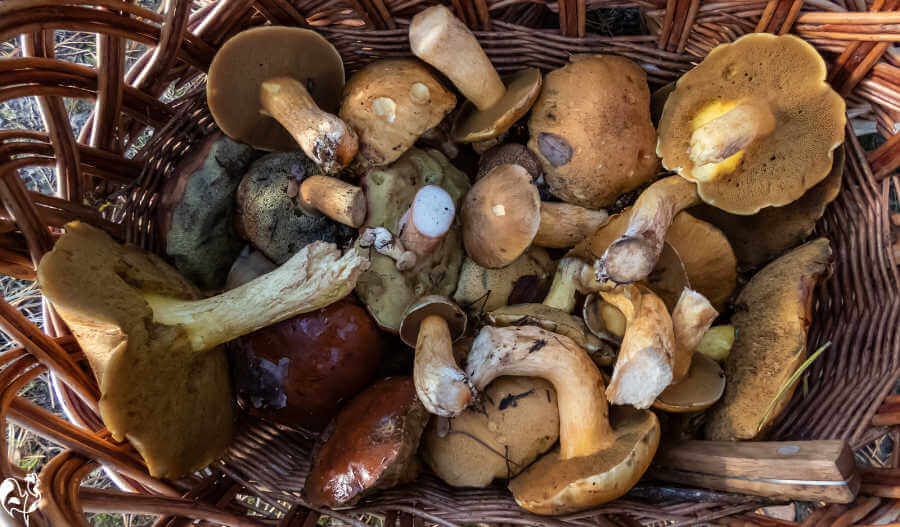 Chickens can have any type of edible mushrooms.
8. Can chickens eat cream cheese?
Not really. It's not toxic, but it's too fatty and salty for chickens.
Cream cheese may be delicious on a festive platter, but it's high in fat and sodium, both of which can cause digestive upsets and obesity in poultry.
If you have a little leftover, a pea-sized taste won’t harm them, but avoid making dairy a habit. Chickens don’t digest lactose well, and rich foods can quickly lead to health issues.
Simple rule:
- Avoid all dairy-based dips and spreads.
- Cream cheese wrapped in smoked salmon, my favourite starter, is best kept for humans. The salt, smoke, and preservatives are all too much for your flock(6).
Main courses.
9. Can chickens eat turkey?
Yes. Turkey is one of the healthiest festive leftovers you can offer your flock.
It's naturally high in protein, low in fat, and a good source of phosphorus and potassium, which help strengthen eggshells(5, 7), and iron, which supports egg quality and baby chick health(8).
If you’ve had your fill, let your flock enjoy the leftovers, both meat and bones. Chickens will happily pick a carcass clean if you leave it in the run.
Quick tips:
- Remove skin, stuffing, and any sauces (including gravy which is too salty) first.
- Serve plain, unseasoned, and in small pieces.
- Remove any leftovers from the run before dusk to avoid attracting rodents.
10. Can chickens eat other types of meat?
Yes. Fresh, unprocessed meat is fine for chickens, in moderation.
A small handful of leftover roast is a welcome winter treat, but their main diet should still be a balanced poultry feed.
Whether it’s beef, lamb, pork, or chicken itself, plain cooked meat provides valuable protein and minerals. Just remove any excess fat, skin, or seasoning first.
Avoid:
- Processed meats like ham, bacon, or sausages. They're too salty and fatty.
- Deep-fried or breaded meats.
For a full guide about chickens and meat, including how to prepare it safely, see my article: Can chickens eat meat?
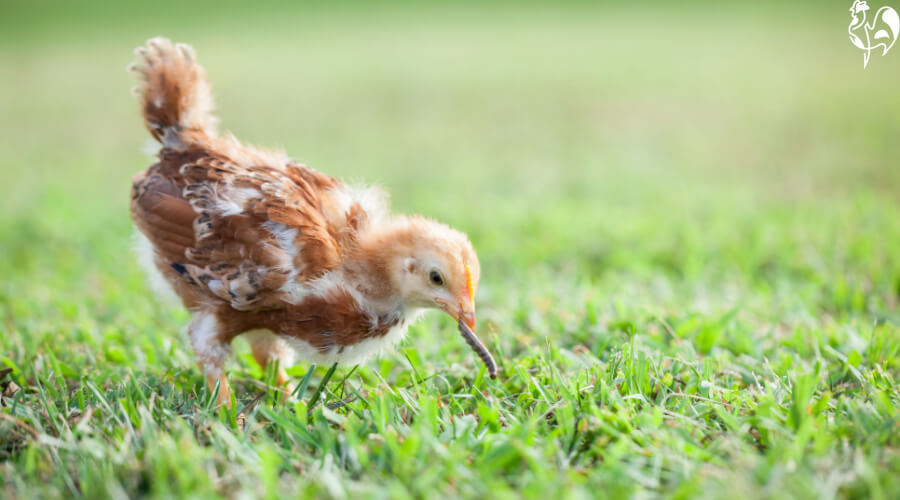 Chickens will eat any form of meat from a very young age!
11. Can chickens eat fish?
Yes. Fish is one of the healthiest proteins you can give your flock.
It's packed with omega-3 oils and amino acids that help support feather growth and egg quality. Most types of plain, cooked fish are fine: cod, sea bass, sea bream, or salmon.
Don't discard fish bones; instead, give your chickens the remains. As with turkey, they will pick the bones clean.
Avoid:
- Anything salted, smoked, or fried.
- Fish cooked with butter or oil.
For recipes, full guidance, and nutritional breakdowns, see my article: Can chickens eat fish?
🐥 A note from my flock: in Italy, where we used to live, fish forms the main part of the Christmas Eve meal for both starters and main course. So of course, I've kept up that tradition with my flock, too!
I often turn leftover fish into a "pot-luck" mix for my hens, and they'll pick every last morsel clean.
You can see them enjoying my pot luck fish recipe in this short video below. Watching them share a meal together always reminds me how food can bring calm to even the most excitable flock.
12. Can chickens eat plant based meals and vegetables?
Yes. Almost all plant-based foods and vegetables are safe and healthy for chickens.
Chickens are omnivores: they'll basically eat anything, plant or meat.
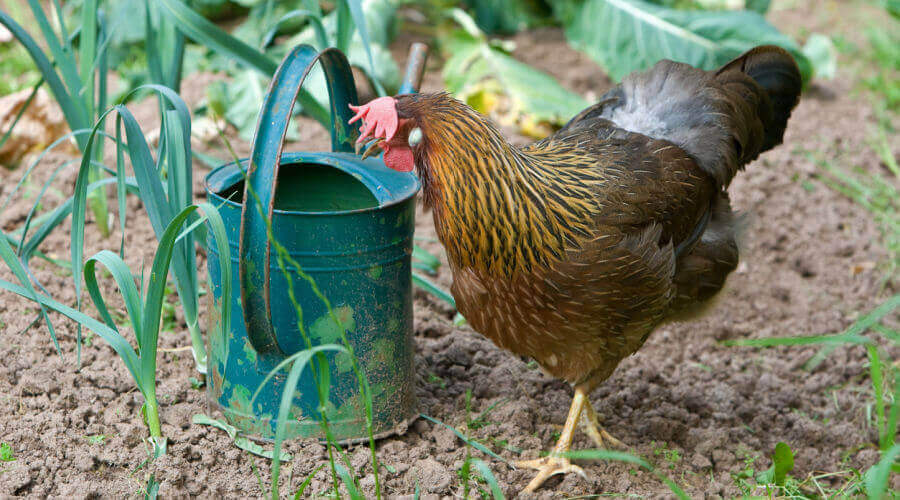
So if you're a vegetarian or vegan and have some surplus food, virtually nothing is off the poultry menu as long as it's plain, unseasoned and free from rich sauces.
Good options include:
- Nut roasts: packed with healthy protein and fibre.
- Soy-based food: one of the main sources of protein for chickens in commercially produced chicken feed. But some recent studies(9) have found pastured chickens not fed on soy-based diets have a lower incidence of bacteria in their gut, so feed in moderation.
- Tofu: high in protein, calcium and iron, so it's helpful to see chickens through winter cold, helps egg quality(8, 11), and critical to maintain bone density in laying hens.
- Most vegetables are good: but avoid onions and green potatoes since they contain toxins(10).
- For a detailed guide: take a look at my article with specific information about which vegetables chickens can eat.
Sides.
13. Can chickens eat potatoes?
Only sometimes, and never if they're green or sprouting.
White potatoes belong to the nightshade family and contain solanine, a toxin that can make chickens seriously ill or even kill them(12). Green skin or sprouted potatoes mean solanine is present, so those must go straight to the compost.
Even when safe, potatoes aren't very nutritious. Roasted or fried, they contain excess fat and salt, both of which can cause health problems including Sudden Chicken Death Syndrome. Avoid giving them to your flock.
If you'd like to offer something similar but healthier, there's a great alternative…
13(a). Sweet potatoes as chicken treats.
Sweet potatoes are perfectly safe for chickens, and very nutritious.
They're not actually related to white potatoes and contain no solanine. Baked or boiled, they're especially rich in vitamins A and B6, which support cell growth, the immune system, and healthy egg production(13, 14).
Quick tips:
- Avoid fried or seasoned potato dishes.
- Stick to plain, cooked sweet potato.
- Feed small portions once or twice a week.
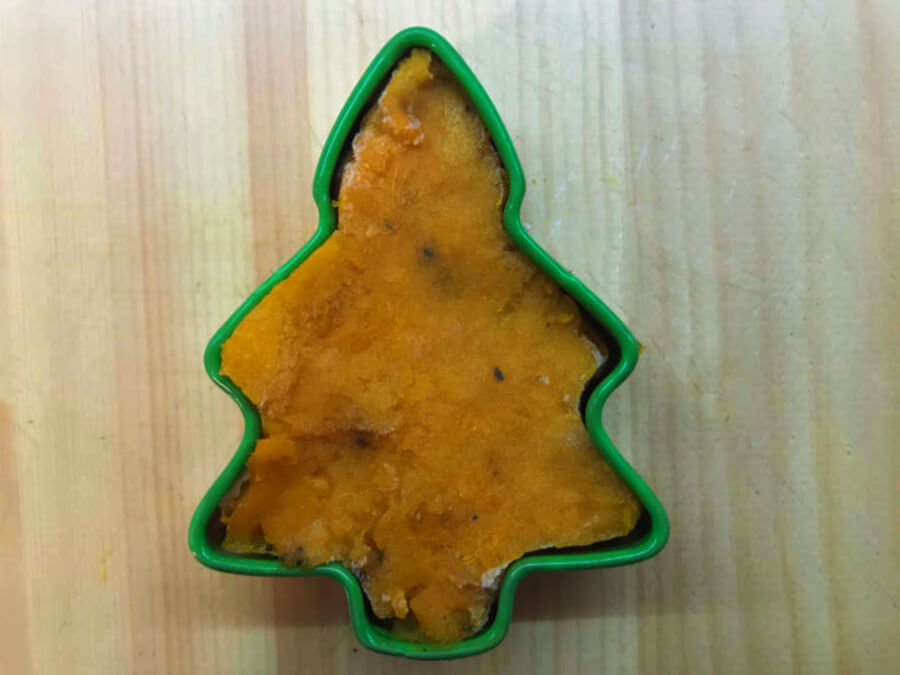
🐥 A note from my flock: I often bake sweet potatoes whole and serve them halved, skins and all, for an easy winter chicken treat.
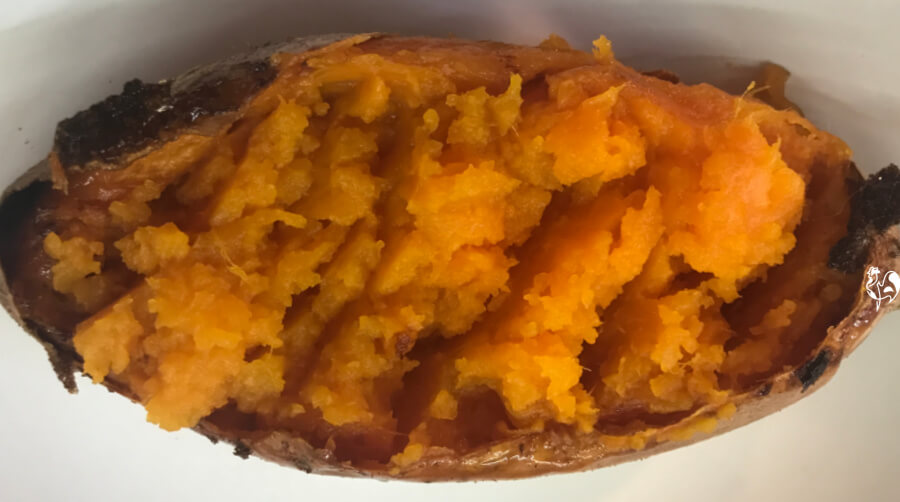
If I have time, I bake the flesh in a Christmas cookie cutter. I'm sure my flock appreciate the effort!
14. Can chickens eat cooked rice?
Yes, but it isn't especially nutritious, so feed it sparingly.
Rice contains only modest amounts of useful vitamins and minerals, so think of it as a filler rather than a healthy extra. Rice cooked with salt, stock, butter, or seasoning should be avoided.
That includes dishes like risotto: lovely for humans, not good for hens.
Quick tips:
- Plain, cooked white or brown rice is fine, but...
- Feed small amounts only — it's low in nutrients.
- Avoid salted, seasoned, or oily rice dishes.
14(a). Can chickens eat sushi?
Yes — surprisingly, many chickens love it! The ingredients are usually safe: fish, vegetables, and seaweed.
Just remove any wasabi, and avoid soy sauce, as it’s far too salty for poultry.
14(a): can chickens eat sushi?
- Yes! Sushi is usually made of fish, vegetables and seaweed, all of which are healthy chicken treats.
- If you've added wasabi, take it off first. And avoid adding soy sauce which is much too salty for poultry.
15. Can chickens eat brussels sprouts?
Yes. Brussels sprouts are an excellent festive treat for chickens!
They're rich in potassium (important for strong eggshells) and vitamin K, which helps blood clot properly(15) and is a useful nutrient for any flock where pecking scuffles occasionally arise.
My chickens prefer sprouts cooked rather than raw. The softened texture seems to win them over. So any leftover cooked sprouts from your holiday table make a perfectly healthy addition to their treat bowl.
Quick tips:
- Preparing fresh sprouts? Don't discard the outer leaves! A quick steam or boil makes them flock-friendly.
- Feed cooked or lightly steamed sprouts for best acceptance.
- Raw sprouts are safe, but often ignored.
- Avoid butter, salt, or seasoning.
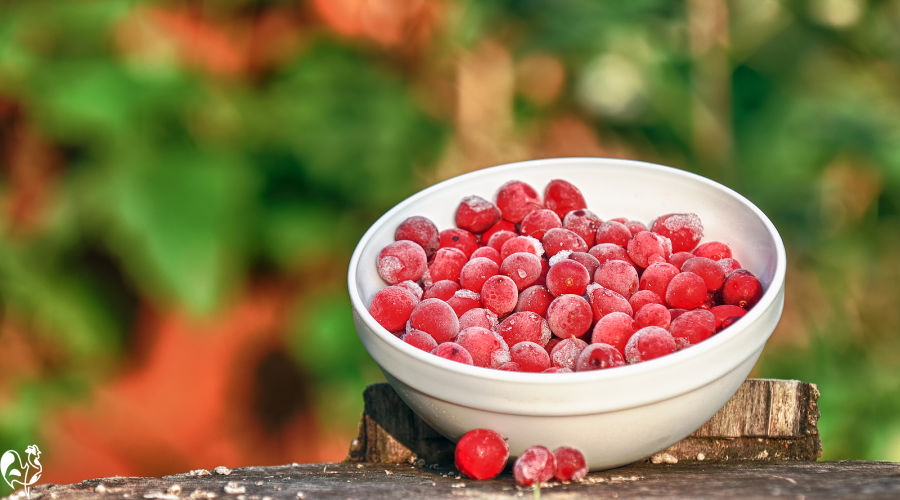
16. Can chickens eat cranberries?
Fresh cranberries are a healthy, vitamin-rich treat for chickens.
Chickens (like wild birds) enjoy them naturally, and they're a good source of vitamin C, B vitamins, and potassium, all helpful for bone strength, feather growth, and overall winter resilience.
Where things get trickier is the festive version…
Cranberry sauce ("jelly" in the US) contains large amounts of sugar and syrup used to soften the berries' natural sharpness. Sugar itself isn't toxic to chickens, but it does contribute to obesity, fatty liver disease, and other long-term health problems.
So:
- Fresh cranberries? Yes.
- Cranberry sauce? Best avoided.
If you have leftover berries from a holiday recipe, serve a small handful to your flock. They'll enjoy the tart flavour far more than we do!
Desserts.
17. What fruit can chickens eat?
Almost all fresh fruit is safe for chickens, and many are full of vitamins they'll happily tuck into.
Apples, berries, melon and watermelon, bananas, mango, grapes, pears… the whole fruit bowl is fair game.
You may see warnings about apples or apricots, but that applies only to the seeds/pits, which contain tiny traces of cyanide. The fruit itself is perfectly safe.
If you're making a fruit salad for a festive meal, save a few fresh pieces for the flock, but leave out the sugar or syrup.
Avoid:
- Fruit canned in syrup: it's much too sugary, increases weight too quickly and can lead to multiple health problems(16).
- Fruit dipped in chocolate
- Mouldy fruit of any kind
For a deeper dive into chickens and fruit, here's my full guide.
18. Can chickens eat apple or pumpkin pie?
No. Pies are a people treat, not a poultry treat.
While fresh apples and pumpkins themselves are wonderfully nutritious for chickens, the pies we make from them are not. Pie fillings (especially canned purées) are usually loaded with sugar, and the pastry adds even more fat and sugar.
A bite won't harm them, but regularly feeding sugary foods can lead to long-term problems.
If you'd like to share something seasonal, offer fresh pumpkin or make my healthy Poultry Pumpkin Pie, which avoids added sugar and uses simple, wholesome ingredients.
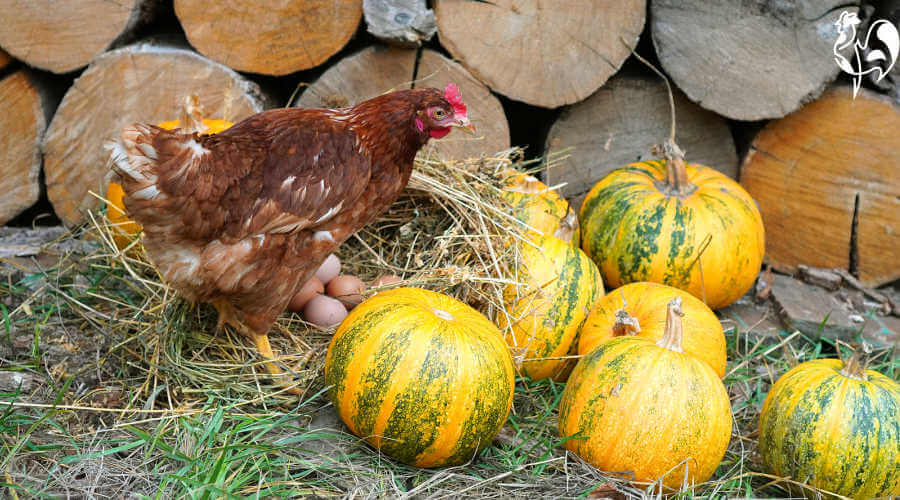 Pumpkins are fine, but not pumpkin pie.
19. Can chickens eat cheese?
Only in tiny amounts, but preferably not at all.
Chickens don't digest lactose well, so dairy products can irritate their digestive system and cause diarrhoea and dehydration. Hard cheeses also contain high amounts of saturated fat and salt, neither of which do chickens any favours.
Cottage cheese may seem gentler, but many varieties are surprisingly high in sodium.
If you really want to share a trimming from a cheeseboard, keep it pea-sized and infrequent.
- Safest approach: enjoy the cheese yourself. Your chickens won’t miss it.
20. Cookies.
Most human cookies, no. They’re too sugary, buttery, and often chocolatey.
Sugar is one of the biggest long-term dietary hazards for chickens. Even plain cookies are typically loaded with fat and refined sugar, which can lead to obesity and fatty liver disease.
But here's some good news: I have my own chicken-friendly cookie recipe that's low in sugar, high in nutrients, and flock-approved.
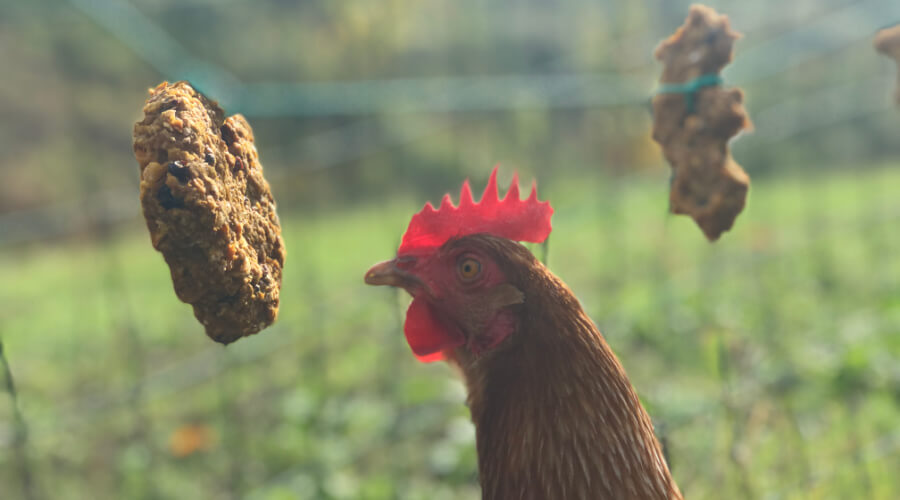 Chicken-friendly cookies are popular with my Red Stars!
What festive foods should chickens never eat?
Some festive treats are absolutely off the menu for your flock, even in tiny amounts.
1. Chocolate.
- Never feed chocolate to chickens.
- It contains theobromine, which is toxic to poultry and can cause heart problems, seizures, and potentially death.
- That means no chocolate cake, no chocolate biscuits, no chocolate chips, and no "just one tiny piece".
2. Christmas pudding.
- Traditional Christmas pudding (also called "plum" or "figgy" pudding) is almost entirely dried fruit, which means as much as 42% sugar content.
- It also often contains alcohol, which chickens must never consume.
- While the ingredients sound wholesome (raisins, currants, apples), the sugar load alone makes this one a firm no.
3. Anything salted, fried, or heavily seasoned.
- That includes seasoned stuffing, gravy, salted nuts, cured meats, fried potatoes, and rich sauces.
- Salt and saturated fats are two of the biggest dietary risks for backyard hens.
4. Alcohol.
- Even tiny amounts are dangerous.
- Keep all wines, ciders, liqueur-soaked desserts, and brandy butter well away from the flock.
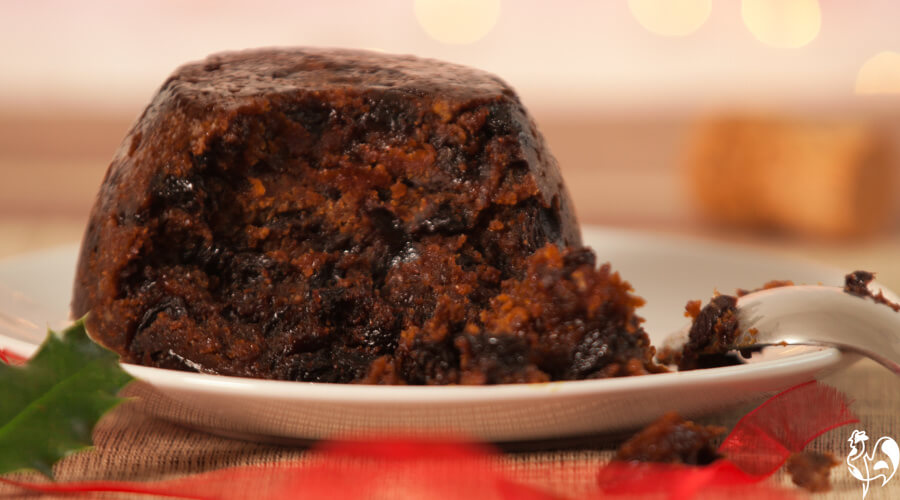 An English Christmas pudding.
A gentle note to end on…
Chickens can eat most festive foods – but...
Festive treats are fun to share, and it's natural to want to include your flock in the celebrations.
As long as their regular feed stays at the heart of their diet, the occasional seasonal nibble is perfectly fine, and often much enjoyed.
Choose simple, wholesome foods, offer treats in moderation, and you'll keep your chickens healthy, content, and happily pecking their way through the winter months.
And if you're ever unsure about a particular festive food, these quick answers may help…
Frequently Asked Questions about chickens and festive foods.
Can chickens eat Christmas leftovers?
Can chickens eat Christmas leftovers?
Yes, many plain, unseasoned leftovers such as cooked vegetables, turkey, and a little fish are perfectly fine.
Avoid anything salty, sugary, creamy, fried, or heavily seasoned.
Can chickens have party snacks?
Can chickens have party snacks?
Only certain ones. Unsalted nuts, mushrooms, and leftover fresh vegetables are suitable.
Don't offer cured meats, salted crackers, crisps, dips, and cheese boards.
What is the healthiest festive treat for chickens?
What is the healthiest festive treat for chickens?
Fresh vegetables are the best option, especially cooked Brussels sprouts, carrots, peas, sweet potato, pumpkin, and leafy greens.
What festive foods are dangerous for chickens?
What festive foods are dangerous for chickens?
Chocolate, Christmas pudding, salted foods, alcohol, green potatoes, and anything fried or heavily seasoned.
Can chickens eat stuffing or gravy?
Can chickens eat stuffing or gravy?
No. Both tend to be salty, fatty, and full of ingredients like onions, butter, and stock cubes that aren't suitable for chickens.
How often can I give my chickens treats during the holidays?
How often can I give my chickens treats during the holidays?
No more than once or twice a week, and only after they've eaten their regular feed. Treats should be less than 10% of their diet.
What's the best safe "special meal" for chickens at Christmas?
What's the best safe "special meal" for chickens at Christmas?
My top recommendation would be a festive veggie platter: cooked sprouts, sweet potato, carrots, peas, a few fresh cranberries, and a sprinkle of chopped nuts.
They'll love it, and it's genuinely good for them.
Can chickens share our dessert leftovers?
Can chickens share our dessert leftovers?
Most desserts are too sugary. Fresh fruit is fine, but pies, puddings, sweet sauces, custards, and cookies are best avoided.
Can chickens eat Thanksgiving or Christmas turkey?
Can chickens eat Thanksgiving or Christmas turkey?
Yes! Plain, cooked turkey (no skin, seasoning, or gravy) makes an excellent protein-rich treat.
Do I need to worry about European kitchen-scrap laws?
Do I need to worry about European kitchen-scrap laws?
Technically, yes. In the UK and EU, kitchen scraps (even from home kitchens) shouldn't be fed to poultry.
Many keepers aren't aware of this rule, so it's good to know and make your own informed choice.
Here's my note about this, for your information:
European Feed Regulations.
Please note: I am required to tell you that in Europe, including the UK, regulations state that chickens should not be fed any foods which have been in a kitchen, whether the kitchen is a professional or a domestic one.
This includes meats, vegetables and any kitchen scraps and it applies to all backyard chickens, however large or small the flock, and whether or not you sell their eggs or meat to others.
There are currently ongoing discussions as to whether this law can be relaxed.
Enjoy more articles about what chickens can (and should) eat.

Sources.
A lot of "facts" you'll find on the internet are often people's individual views, based on inaccurate information repeated from poor quality sources.
The information I provide in this article and others is based not just on my own experience, but on evidenced facts from scientific, peer-reviewed research and books from highly respected and experienced poultry keepers such as Gail Damerow.
Some of the trusted sources I have used in this article are these.
Damerow, Gail: The Chicken Health Handbook. Pub. Storey, 2009, updated 2015.
1. Atuahene, C. et al: Value of peanut skins as a dietary ingredient for broiler chickens. Pub. Journal of British Poultry Science, 2007.
2. Chen, J and Balnave, D: The influence of drinking water containing sodium chloride on performance and eggshell quality of a modern, colored layer strain. Pub. Journal of Poultry Science, 2001.
3. Rajaguru, R. et al: The Effects of Feeding High Protein Diets to Chickens. Pub. Journal of Poultry Science, 1966.
4. Van de Heider, M. E.: The effect of deshelled and shell-reduced mussel meal on egg quality parameters of organic laying hens under commercial conditions. Pub. Journal of Applies Poultry Research, 2021.
5. Leach, R. M.: Studies on the Potassium Requirement of the Laying Hen. Pub. Journal of Nutrition, 1974.
6. Afe, O. H., et al: Chemical hazards in smoked meat and fish. Pub. Journal of Food Science and Nutrition, 2021.
7. Nie, W, et al: Effects of dietary phosphorous supplementation on laying performance, egg quality, bone health and immune responses of laying hens challenged with Escherichia coli lipopolysaccharide. Pub. Journal of Animal Science and Biotechnology, 2017.
8. Taschetto, D., et al: Iron requirements of broiler breeder hens. Pub. Journal of Poultry Science, 2017.
9. Lourenco, J. F., et al: The Effects of Feeding a Soybean-Based or a Soy-Free Diet on the Gut Microbiome of Pasture-Raised Chickens Throughout Their Lifecycle. Pub. Department of Animal and Dairy Science, University of Georgia, 2019.
10. Maxwell, M: Production of Heinz body anaemia in the domestic fowl after ingestion of dimethyl disulphide: a haematological and ultrastructural study. Pub. Research in Veterinary Science, 1981.
11. Damaziak, K et al: Productive performance and egg quality of laying hens fed diets supplemented with garlic and onion extracts. Pub. Journal of Applies Poultry Research, 2017.
12. Murugesen, G. R.: Prevalence and effects of mycotoxins on poultry health and performance, and recent development in mycotoxin counteracting strategies. Pub. Journal of Poultry Science, 2017.
13. Yuan, J, et al: Effect of Dietary Vitamin A on Reproductive Performance and Immune Response of Broiler Breeders. Pub. PLoS One, 2014.
14. Daghir, N. J: Vitamin B6 in Poultry Nutrition: A Review. Pub. World's Poultry Science Journal, 2019.
15. Leeson, S.: Vitamin Deficiencies in Poultry. Pub. MSD Veterinary Manual, 2017.
16. Hussein, A. S., et al: Effect of dietary inclusion of sugar syrup on production performance, egg quality and blood biochemical parameters in laying hens. Pub. Journal of Animal Nutrition, 2018.
17. Hamilton, T. S., and Card, L. E.: The Utlilization of Lactose by the Chicken. Pub. Journal of Agricultural Research, Division of Animal Nutrition, 1924.

Partner of the Month: Grandpa's Automatic Feeder
Popular articles

Copyright © 2012- Raising Happy Chickens: All rights reserved regardless of links or attributions.
I do not SELL ANY PERSONAL INFORMATION FROM THIS WEBSITE. PLEASE SEE My PRIVACY POLICY FOR MORE DETAILS.
Click to see my copyright, privacy and affiliates policies.
Click Here to see my policy about external ads, articles and links.
Click here to contact me.