Fermenting chicken feed: what it is and why it's good for your chickens.
You may have heard of fermented chicken food, but do you know how good it is for your flock?

We all want the best for our chickens: healthy birds, nutritious eggs, and as few problems as possible along the way.
That's why many backyard keepers are curious about fermenting chicken feed.
You may have seen mixed opinions online about whether fermented feed is truly helpful. Some people swear by it, others aren't convinced.
In this article, I'll untangle the research and explain the real benefits of fermenting chicken feed (and the few possible drawbacks) so you can decide whether it's worth trying for your own flock.
And in a follow-up article, I'll show you exactly how to ferment chicken feed, step by step.
🪶 Featherlight Takeaways.
Quick insights from this article – especially helpful if you’re short on time
- Fermenting chicken feed creates natural probiotics which improve gut health and digestion.
- Better digestion means chickens can absorb more nutrients from the same amount of feed.
- Studies show fermented feed can help boost immunity and reduce harmful bacteria.
- It may help improve eggshell strength, egg quality, and overall condition.
- Used sensibly, fermenting feed can even save money by reducing waste and feed use.
Want to try it yourself? My next article shows you exactly how to ferment chicken feed, step by step.
What exactly is fermentation?
If you've ever eaten yoghurt, cheese, or sourdough bread, you have already enjoyed foods that have been fermented.
Fermentation is simply the process of soaking solids in a liquid so that naturally occurring "good" bacteria can grow. These bacteria help break food down, making it easier to digest and more nutritious.
You've probably heard the term 'probiotics'. That's exactly what fermentation produces.
For chickens, fermented feed can:
- make nutrients easier to absorb
- improve gut health
- increase the amount of usable protein
- and boost important vitamins such as K, C, and B.
All of which can add up to healthier, stronger birds.
Are fermented foods healthy for chickens?
In a word: yes.
Just like people, chickens rely on healthy gut bacteria to digest food properly. When that balance is disrupted, for example by stress, illness, poor diet, or even antibiotics, birds can struggle to absorb the nutrients they need.
Fermented feed helps restore that balance.
By increasing the amount of beneficial bacteria in the gut, fermentation makes food easier to break down and nutrients easier to use. The result is a stronger digestive system and a healthier, more resilient chicken.
And it isn't just theory. Research into poultry nutrition has repeatedly shown that fermented feed can improve overall health, support better growth, and help protect against harmful bacteria.
That's why many commercial farms use fermented feed as a natural alternative to antibiotics, and why it can be such a useful tool for backyard flocks, too.
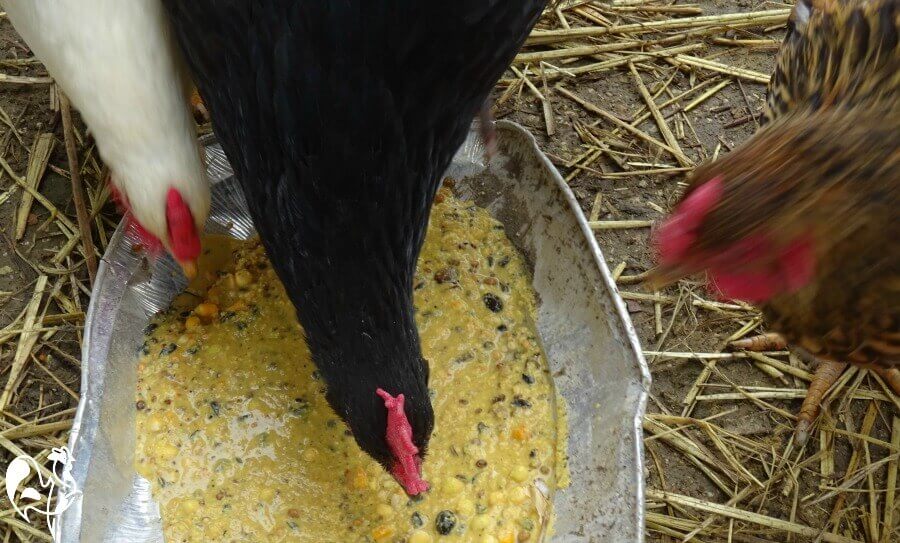
🐥 A note from my flock: I ferment feed for my chickens regularly, particularly during periods of stress. The chickens love it: on this photo you can see Henrietta's head as she rushes to get to the fermented treat before it's all gone!
What are the specific benefits for chickens?
Research (e.g. 1, 2, 3) into fermented poultry feed has identified several clear advantages. Here are the most important ones for backyard flocks:
- Improved digestion: the probiotics created during fermentation help break food down more effectively, making it easier for chickens to digest what they eat.
- Better use of nutrients: vitamins and minerals become more available, so chickens get more benefit from the same amount of feed.
- Stronger resistance to illness: the lactic acid produced during fermentation creates an environment where harmful bacteria struggle to survive, helping to protect against infections such as Salmonella(4).
- Support for young chicks: even very young birds can eat fermented feed. It provides easily digested nutrition and extra hydration at the same time.
 Even very young chicks can eat fermented food.
- Healthier eggs: studies have shown that fermented feed can contribute to stronger eggshells and, in some cases, slightly heavier eggs.
- Help during stressful times: because fermented feed is higher in available protein, it can be especially useful during moulting, very cold weather, recovery from illness, or after a predator scare.
- In short, fermentation turns ordinary chicken feed into a more nutritious, gut-friendly version of itself. And over time, that can mean a healthier, more resilient flock with fewer illnesses and a longer life.
Does fermenting chicken feed save money?
It certainly can.
When feed is fermented, it absorbs liquid and increases in volume. That means chickens feel full on less than they would normally eat.
More importantly, because fermented feed is easier to digest and nutrients are absorbed more efficiently, the flock will often need less feed overall to maintain the same level of health. Some studies suggest savings of up to 20%(1).
There's another practical bonus, too. Fermented feed is moist and clumps together, so it's less likely to be scratched or kicked out of feeders. Less waste means more of your hard-earned money actually ends up in your chickens rather than on the coop floor.
So while fermenting does take a little extra effort, it can pay for itself in healthier birds and a lower feed bill.
Are there any drawbacks to fermenting chicken feed?
Overall, fermenting feed is very safe. But like anything involving food and moisture, there are a few things to be aware of.
- Consistency matters. Fermentation works best at a steady, moderate temperature. If the weather is very cold or very hot, results can be less predictable.
- Chickens may need time to adjust. It's best to introduce fermented foods while they're young chicks.
- Overfeeding can cause weight gain. There's some evidence from research that, as with any high protein food, fermented foods can increase chickens' weight.(1) And fat chickens are not healthy!
- Cleanliness is essential. In one research trial, problems occurred when poor-quality feed was fermented in airtight plastic containers for too long. The issue wasn’t fermentation itself, but improper handling.(5)
- As long as you start with a good quality feed, use clean containers and allow your chickens time to get used to it, fermented feed will be both safe and beneficial for your chickens.
Frequently asked questions about fermenting chicken feed.
Can all chicken feeds be fermented?
Can all chicken feeds be fermented?
Most whole grain and crumble feeds ferment very well. Pellets can be fermented too, but they tend to break down into a mash-like texture.
How long does fermented feed last?
How long does fermented feed last?
Once properly fermented, feed should be used within 2–3 days. In warm weather it will ferment more quickly and spoil sooner.
Can baby chicks eat fermented feed?
Can baby chicks eat fermented feed?
Yes. Fermented feed is safe for chicks and can be especially helpful because it's easy to digest and provides extra hydration.
Can I ferment feed in winter?
Can I ferment feed in winter?
Yes, although the process will be slower in cold temperatures. Keeping the container indoors or in a warmer spot helps.
Should fermented feed replace regular feed completely?
Should fermented feed replace regular feed completely?
No. Use it as part of the diet rather than the only food, especially when first starting out.
How to ferment feed for chickens in four easy steps.
If you're convinced by the research and want to try fermenting some feed for your flock, the next step is learning how to do it safely and successfully.
Fermentation is not a difficult process, but it does need the right conditions to be successful.
In my follow-up article about how to ferment chicken feed, I walk you through the whole process in clear, practical steps.
More about healthy, natural foods for chickens.

Sources.
A lot of "facts" you'll find on the internet are often people's individual views, based on inaccurate information repeated from poor quality sources.
The information I provide in this article and others is based not just on my own experience, but on evidenced facts from scientific, peer-reviewed research and books from highly respected and experienced poultry keepers such as Gail Damerow.
Some of the trusted sources I have used in this article are these.
1. Engberg et al: 'Fermented feed for laying hens: effects on egg production, egg quality, plumage condition and composition and activity of the intestinal microflora'. Pub U.S. National Library of Medicine, March 2009.
2. Steenfeldt, S, et al: Effect of feeding silages or carrots as supplements to laying hens on production performance, nutrient digestibility, gut structure, gut microflora and feather pecking behaviour. Pub. Journal of British Poultry Sciences, 2007.
3. Beal, Niba et al: 'Potential of bacterial fermentation as a biosafe method of improving feeds for pigs and poultry'. Pub. African Journal of Biotechnology, May 2009.
4. Heres, L. et al: Passage of Salmonella through the crop and gizzard of broiler chickens fed with fermented liquid feed. Pub. Journal of Avian Pathology, 2003.
5. Centers for Disease Control and Prevention, US: 'Why does Alaska have more botulism?'

Partner of the Month: Grandpa's Automatic Feeder
Popular articles



Copyright © 2012- Raising Happy Chickens: All rights reserved regardless of links or attributions.
I do not SELL ANY PERSONAL INFORMATION FROM THIS WEBSITE. PLEASE SEE My PRIVACY POLICY FOR MORE DETAILS.
Click to see my copyright, privacy and affiliates policies.
Click Here to see my policy about external ads, articles and links.
Click here to contact me.