5 chicken breeds that lay beautifully coloured eggs.
When you first start keeping chickens, you tend to be grateful for any eggs at all.
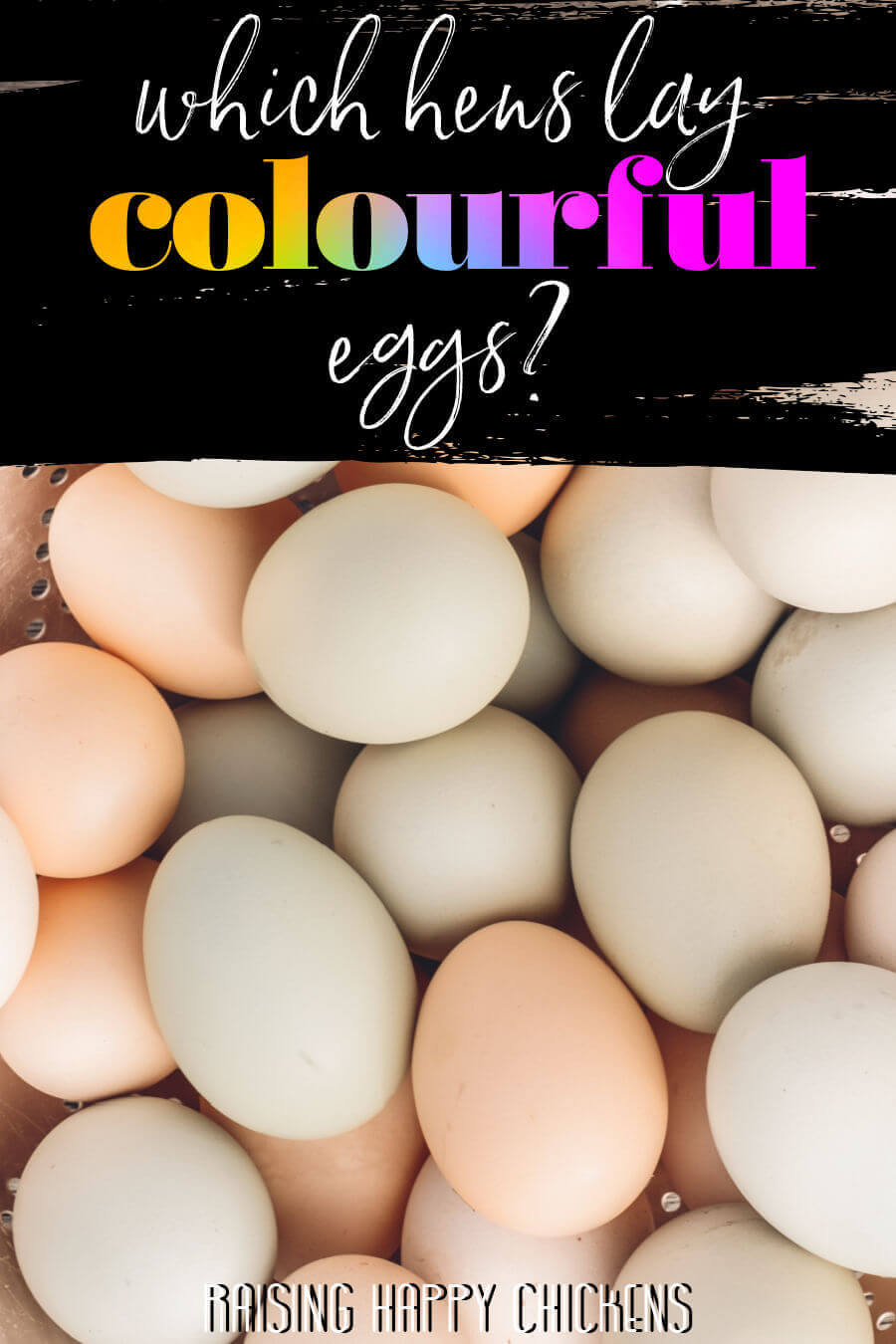

Their flavour, freshness, and nutritional value matter far more than the colour of the shell.
As time goes on, though, many chicken keepers find themselves wanting a little variety. A basket filled with eggs of different shades (how about cream, brown, blue, or green) can be surprisingly satisfying.
Which often sparks curiosity about which breeds lay which colours.
If you're interested in adding a bit more colour to your egg basket, this article will help you explore the options.
It looks at five of the most popular egg colours, explain why eggs differ in colour, and introduce the chicken breeds most closely associated with each shade.
Along the way, I'll also answer some common questions, including whether egg colour affects nutrition, whether earlobes are a reliable clue, and whether there's really such a thing as a black chicken egg.
Why do hens lay different coloured eggs?
All eggs start out with white shells. The colour is caused by pigments added during the egg-forming process.
The point at which that pigment is applied determines both the colour and how deep it goes into the shell.
Blue pigment, for example, is added right at the beginning of shell formation. That's why blue eggs are blue all the way through, inside and out.
Brown pigment is added right at the end of the process, just before the egg is laid. Because it sits on the surface, it can sometimes be scratched or rubbed away.
Green eggs begin as blue eggs. A layer of brown pigment is then added on top of the blue near the end of shell formation, which is why green eggs are blue on the inside but green on the outside.
White eggs simply have no pigment added at all.

Do a hen's earlobes tell what colour eggs she'll lay?
Sometimes, but it's not a reliable guide.
Egg colour is determined by genetics, and so is earlobe colour.
While there's a loose association in some breeds (white earlobes often appearing on white-egg layers, for example), there are plenty of exceptions.
The most accurate way to know what colour eggs a hen will lay is simply to know her breed.
Is the nutritional value of a coloured egg different from white?
No.
The nutritional value of an egg depends on how the hen is kept and what she eats, not on the colour of the shell.
Eggs from hens that are well fed and able to forage will be nutritionally similar regardless of whether the shell is white, brown, blue, or green.
Shell strength is influenced by the hen's calcium intake, not shell colour.
Colour itself has nothing to do with nutrition.
If you purchase a product through links on this page, I may receive a small commission at no extra cost to you. I only recommend products I have bought myself, and which I believe will genuinely benefit you. You can read my full disclosure policy here.
Chickens who lay "natural coloured" brown eggs.
These are the light to medium brown eggs most of us recognise from supermarket shelves.
They’re all classed as "brown", but as this selection from my own Red Star hens shows, the shade can vary quite a bit, even between eggs laid by the same bird.
In this case, they range from a very pale cream to a deeper brown.
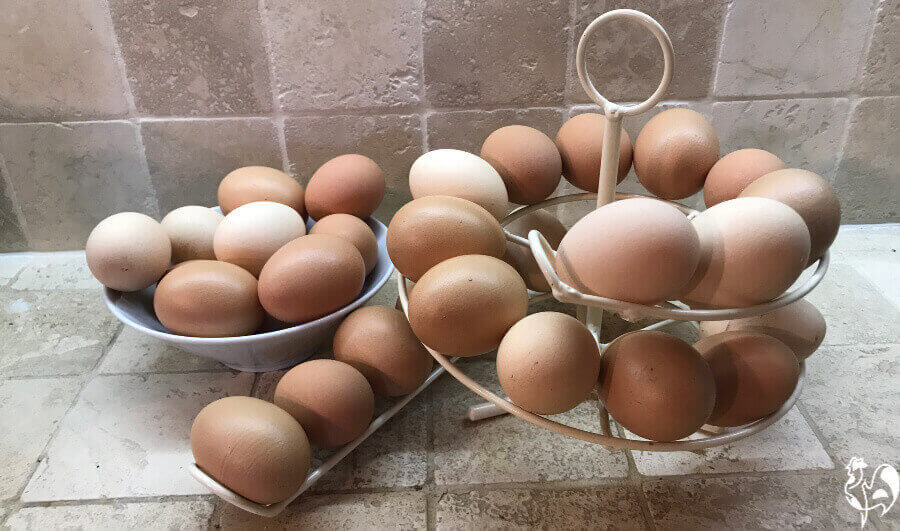 Brown eggs from my Red Star chickens, on my egg skelter.
Red Stars, also known as Red Sex Links, Cinnamon Queens, and Golden Comets, are the most common brown-egg layers. They've been bred over many generations to be exceptionally reliable producers.
Mine lay one egg a day regardless of weather or season, and they tend not to stop even during the moult. They're also excellent foragers, friendly, curious, and endlessly entertaining.
If you're mainly interested in a steady supply of nutritious eggs and you're happy with the classic brown colour, Red Stars are a very good place to start.
These eggs may be considered "plain", but I think they're beautiful in their own way.
If you're in the US, the Cackle Hatchery sells Cinnamon Queen chickens throughout the year.
Find them here, or read my review of Cackle, here.
What chicken breeds lay chocolate brown eggs?
If you’re looking for brown eggs that are closer to chocolate than cream, there are two breeds I'd particularly recommend: the Black Copper Marans and the Welsummer.
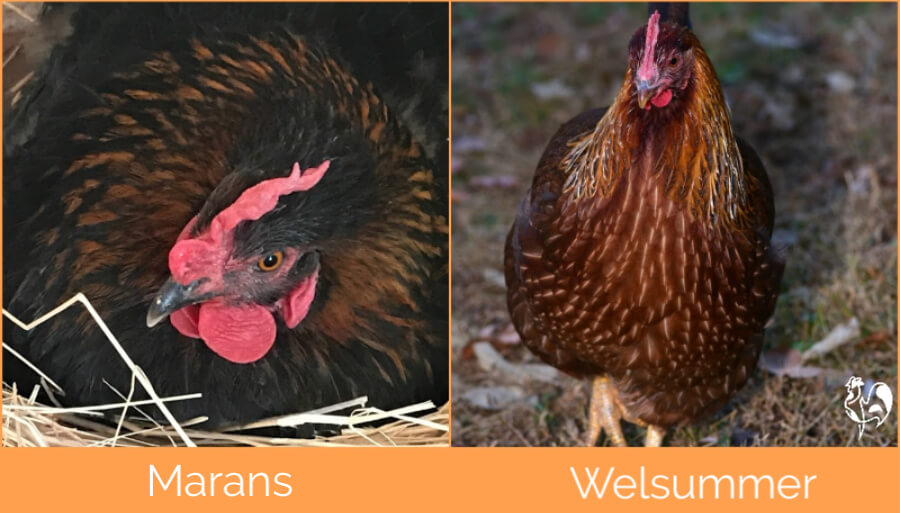 Two of my chocolate brown egg layers.
The Black Copper Marans is a striking bird, the males especially so. Their black feathering can show a green iridescence in sunlight, with rich golden feathers around the neck. A true Marans will have lightly feathered legs; if a bird lacks this, it isn't a purebred Marans.
They're excellent foragers and cope well with both extreme heat and cold. Mine do particularly well in the variable conditions of central Italy.
A Black Copper Marans hen will usually lay around three eggs a week, or roughly 150–200 eggs a year, with shell colour rather than volume being the breed's main attraction.
The Welsummer, by contrast, tends to be very friendly and can go broody quite easily. The hens have warm reddish-brown feathering with darker markings and black tail feathers. Like the Marans, they forage well and suit free-range conditions.
A Welsummer hen will usually lay three to four eggs a week.
The eggs.
Marans eggs are often described as the ultimate chocolate egg. They usually start the season very dark, lighten slightly as the year progresses, and can deepen again after the annual moult.
The brown pigment is added right at the end of shell formation and sits only on the outside of the egg. Inside, the shell remains white. Because of the darkness of the shell, Marans eggs are among the hardest to candle when incubating.
Welsummer eggs are large at between 2 and 3 ounces, and a rich reddish-brown often described as terracotta. They're sometimes speckled and tend to be darkest when a hen first starts laying, becoming lighter with age.
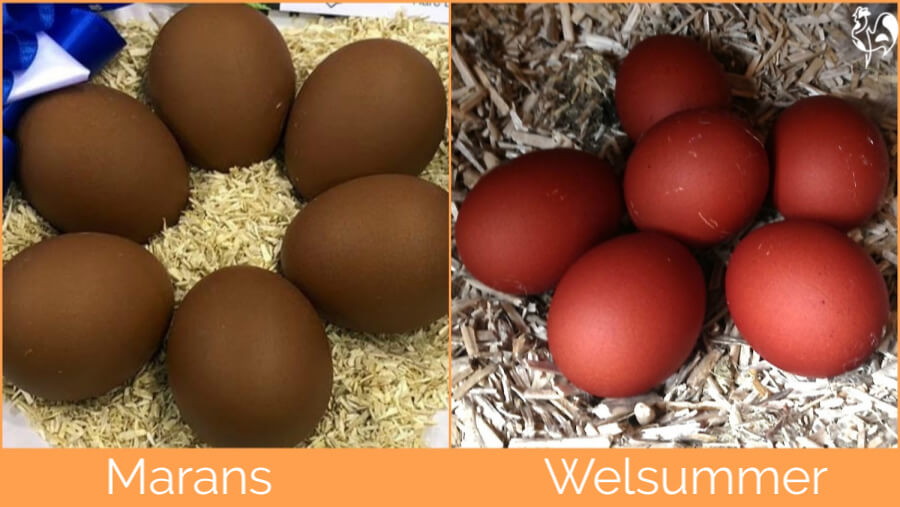 The Marans egg is a true brown, while the Welsummer is reddish-brown, also called terracotta.
Where to buy this breed (or their hatching eggs).
USA: Cackle Hatchery.
If you're based in the United States and are looking to buy hatching eggs, chicks, or adult birds, Cackle Hatchery is a long-established supplier with a wide range of breeds available throughout the year.
They offer everything from hatching eggs to sexed and unsexed chicks, depending on breed and age, and are a useful starting point if you’re exploring coloured egg layers for the first time.
(As always, availability can vary by season.)
See their Black Copper Marans breeds.
Buy Welsummer eggs or chickens, here.
Which chicken breeds lay white eggs?
White eggs are often the most sought-after in supermarkets, largely because of the long-standing belief that they're somehow more nutritious.
As we've seen, there's no truth in that. Eggs laid by hens kept on the same pasture and fed the same diet will be nutritionally similar regardless of shell colour.
If you're looking for a reliable layer of pure white eggs, the breed I most often recommend, and always keep myself, is the Livorno, also known as the Leghorn.
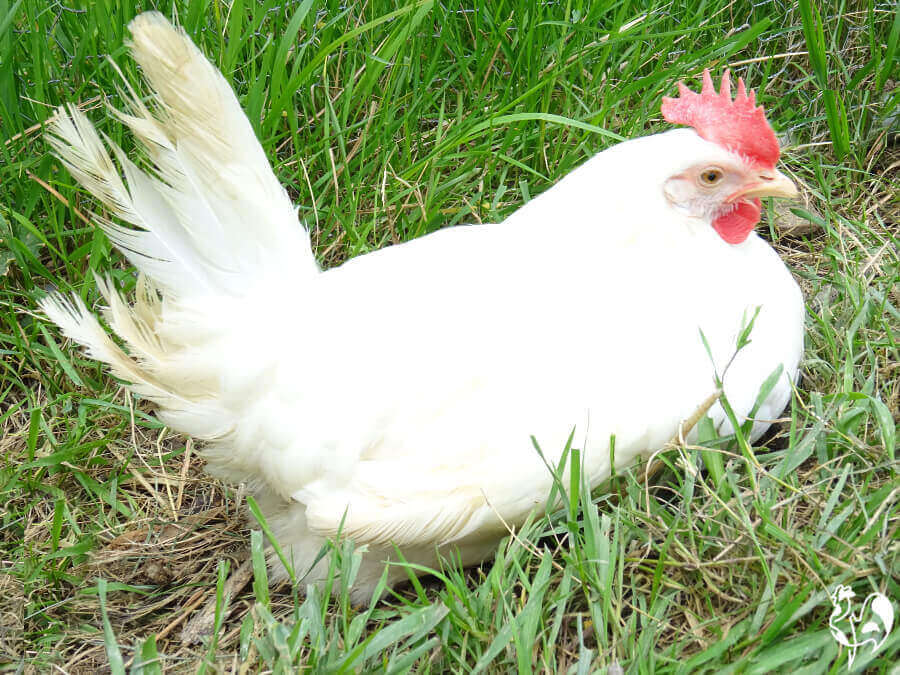 Lou-lou, one of my Livorno, or Leghorn, hens who lays pure white eggs.
They’re excellent foragers and tend to cost less in feed than heavier breeds because they happily supplement their diet with insects, plants, and weeds. Although they enjoy free-ranging, they also adapt well to smaller spaces.
They’re not particularly cuddly or people-focused, so they're not the best choice if you're looking for a pet chicken, or a child-friendly breed. But when it comes to laying, they're outstanding.
My Livornos lay close to an egg a day, with breed standards estimating around 300 eggs per year. That makes them one of the most productive white-egg layers available.
If you're in the US, you can find Livorno (Leghorn) chickens through the Cackle Hatchery.
Chickens who lay blue eggs.
If you're looking for a calm, friendly hen who enjoys foraging, looks appealing, and lays soft pastel blue eggs, the Cream Crested Legbar is a popular choice.
One advantage of the Legbar is that it's an auto-sexing breed, meaning chicks can be sexed at hatch. If you're ordering from a hatchery, this makes it easier to be confident you're getting hens.
Legbars are generally quiet and gentle, which can work very well in a mixed flock. It's worth keeping an eye on them though, as more assertive breeds may try to push them around.
🐥 A note from my flock: I love my Cream Crested Legbars. They're quiet, friendly, and very gentle. The "quiff" on their head makes them unusual to look at, and their eggs are the prettiest colour of all!
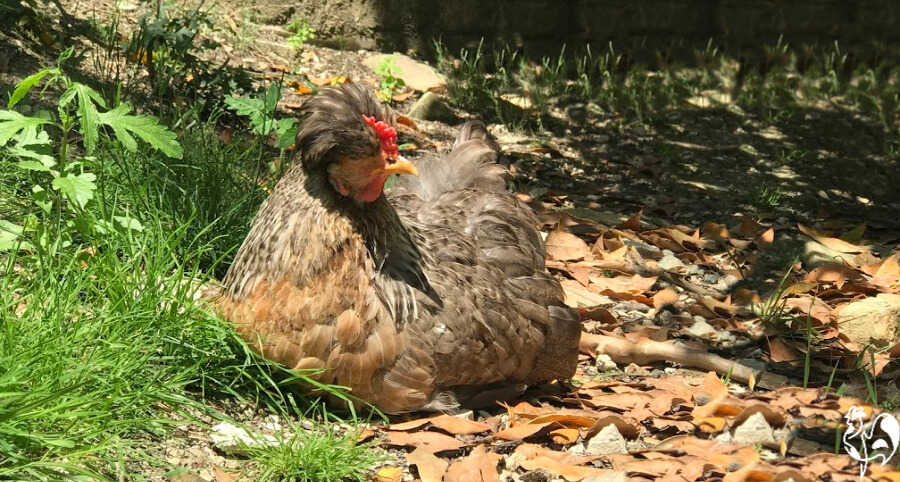 One of my cream crested Legbar hens taking the sun.
They usually start laying at around 24 weeks of age and, in my experience, produce around four medium-sized eggs a week, or roughly 200 eggs a year.
Unlike brown eggs, where the pigment is added only to the surface, the blue pigment in a Legbar's egg is added at the very beginning of shell formation. As a result, the shell is blue all the way through, inside and out.
Don’t expect a bright, vivid blue. Legbar eggs tend to be a subtle pastel shade, which many people find especially attractive.
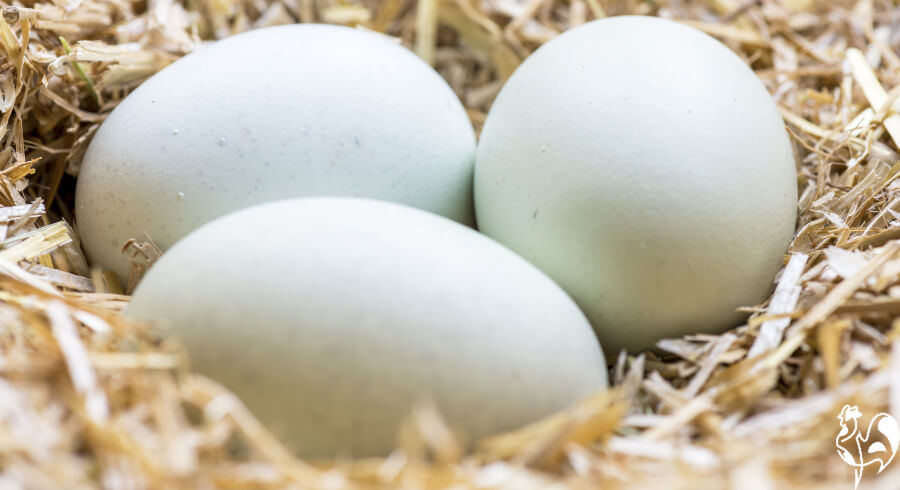 Legbar eggs: a subtle pastel shade.
Buy the Cream Legbar from the Cackle Hatchery, here.
Which chickens lay green eggs? Meet the olive egger.
Olive eggers aren't a recognised pure breed. Instead, they're a cross between a blue egg layer (such as a Cream Crested Legbar) and a dark brown egg layer (often a Black Copper Marans or Welsummer).
If the breeding works out well, the result can be a rich green egg which is sometimes the deep olive colour that gives these birds their name.
It's worth knowing, though, that egg colour in olive eggers can vary widely. Especially when buying from a hatchery, the exact shade will depend on the breeding lines involved and won't always be a true green.
Take a look at some cute olive egger chicks from the Cackle Hatchery.
I've successfully crossed a Black Copper Marans male with a Cream Crested Legbar hen myself, although the only chick to hatch in that instance turned out to be a cockerel. He was very handsome, but not an egg layer!
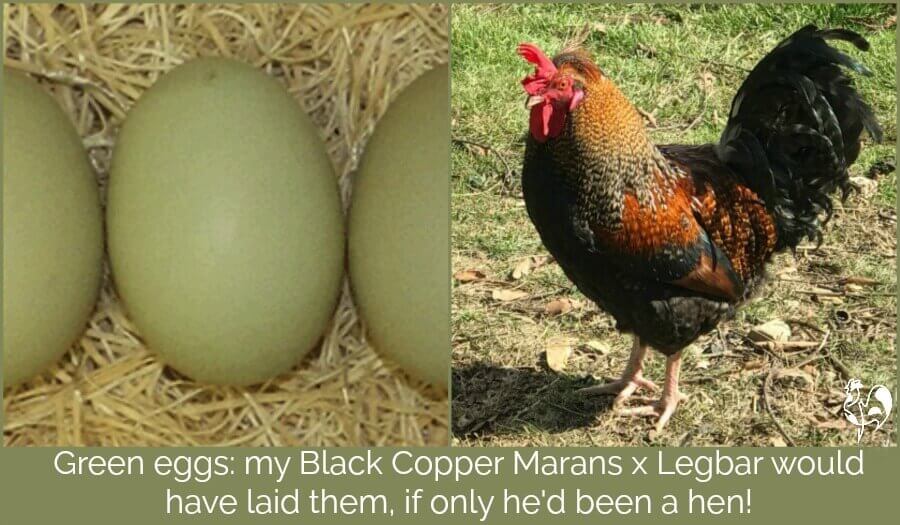
You'll find the Cackle Hatchery's olive eggers, here.
Do chickens lay black eggs?
You may have heard of the striking all-black chicken breed, the Ayam Cemani. A true Cemani is rare and can be extremely expensive, with birds sometimes selling for thousands of dollars.
See the resources section for reputable breeders in the US.
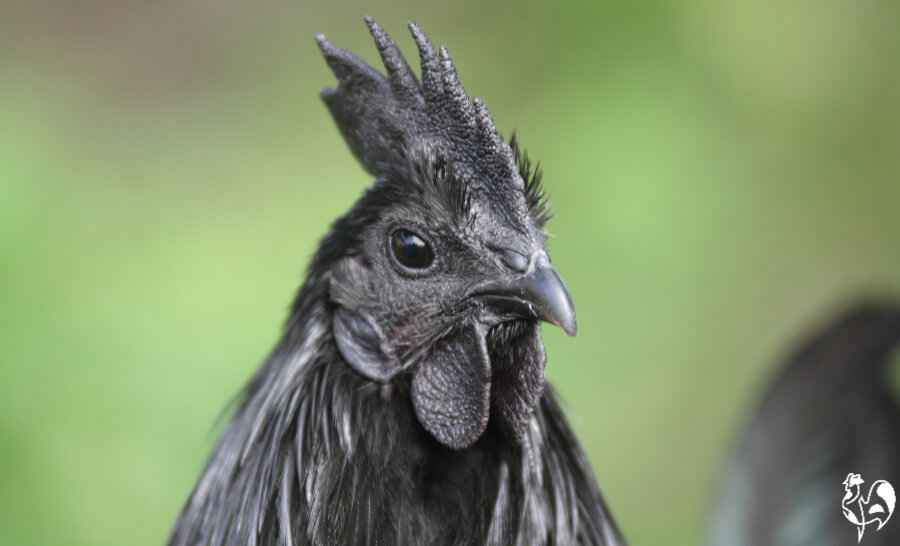
But despite what you may see advertised online, Ayam Cemani chickens do not lay black eggs. Their eggs are a light pinkish or cream colour.
If you ever see a genuinely black egg offered for sale, it wasn't laid by a chicken.
The only fresh, naturally black eggs come from emus, and the difference is obvious. Emu eggs are much larger than chicken eggs and have a rough, pitted surface rather than a smooth shell.
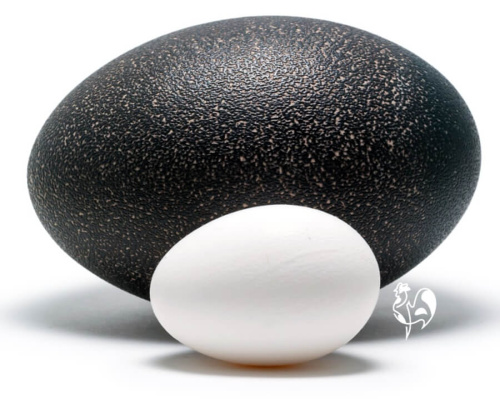 A black emu egg and a white chicken egg - the difference is obvious!
So if you come across images or claims of black chicken eggs, you can be confident they're either dyed, mislabelled, or not chicken eggs at all.
The result of choosing different breeds: my current egg basket.
Here's a selection of my coloured eggs, on my original egg skelter (sadly now out of production).
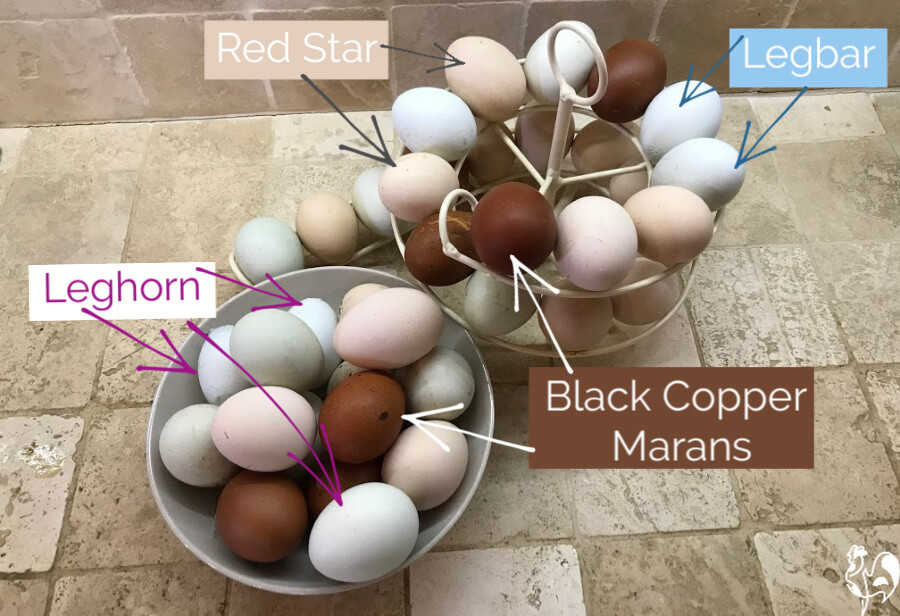 My egg skelter is always full of different coloured chicken eggs!
Enjoy adding different coloured chicken eggs to your collection!

Other articles about chickens and eggs.








Resources and further reading.
1. Munn, D.: Why are hens' eggs different colors? Pub. Michigan State University, 2013.
2. Ayam Cemani Breeders Association, USA.
3. Legbar Club.
4. Leghorn Club (Facebook group).
5. The Livorno (Leghorn) Club itself unfortunately does not have a secure link, so I can't link to it here, but it will appear by doing a simple search.
6. Marans Club, USA.

Partner of the Month: Grandpa's Automatic Feeder

Popular articles




Copyright © 2012- Raising Happy Chickens: All rights reserved regardless of links or attributions.
I do not SELL ANY PERSONAL INFORMATION FROM THIS WEBSITE. PLEASE SEE My PRIVACY POLICY FOR MORE DETAILS.
Click to see my copyright, privacy and affiliates policies.
Click Here to see my policy about external ads, articles and links.
Click here to contact me.